

Over the last three decades, India has undergone a remarkable transformation from economic liberalisation and the rise of global corporations to the digital revolution and the emergence of artificial intelligence.
Few communications professionals have witnessed this evolution as closely as Abhay Dange, whose career has spanned some of the country's most influential organisations, including Mercedes-Benz, Arthur Andersen, Tata Technologies and BMW Group India.
In this conversation, Dange reflects on a career shaped not by chasing headlines, but by helping organisations navigate change, build trust and make better decisions.
Edited Excerpts:
Q: How did your journey in PR begin? Was it a conscious career choice or something you attribute to chance?
To be honest, I never planned a career in communications. Like most engineers, I was convinced the world could be explained logically. Then I started working with people, and that theory didn't survive very long.
My career took me through Mercedes-Benz, Arthur Andersen, Tata Technologies and finally BMW Group India. Looking back, I wasn't chasing a career in PR. I was drawn to industries that were helping shape a changing India. Consulting, engineering, technology and luxury mobility were all writing new chapters, and I was fortunate to witness many of them from the front row.
Somewhere between my first Auto Expo, my hundredth product launch and countless conversations with journalists, I realised the most fascinating part of the automotive business wasn't always under the bonnet. It was around the table. The journalist asking the one question nobody had prepared for. The engineer explaining a brilliant idea in language only another engineer could understand. The CEO balancing ambition with reality. And the communications person quietly hoping the Wi-Fi, the microphones and the presentation all survived the day.
That was probably the moment I realised communications wasn't about managing headlines. It was about helping people understand one another.
Cars are wonderfully predictable. Build them well, maintain them well and they usually behave exactly as expected.
People are gloriously unpredictable.
Before I knew it, communications had become my profession.
Q: What would you consider your defining moment or breakthrough in the industry?
I don't think careers are defined by one big moment. They are shaped by the journey; the people you meet along the way and the perspective you gain over time.
Looking back, my greatest privilege wasn't a promotion or an award. It was having a front-row seat to some of the most significant changes India has witnessed over the last three decades.
I was fortunate to begin my career when India itself was changing gears. I watched consulting become more global, telecom connect millions of Indians, engineering move confidently onto the world stage and luxury mobility evolve from a niche market into an aspiration. At the same time, I watched automotive journalism reinvent itself, from magazines and newspaper supplements to television, websites, digital platforms, creators and now Artificial Intelligence. Every few years, the industry evolved. The best journalists evolved with it.
Most people experienced those changes from the outside. I experienced many of them from inside the room. I had the privilege of watching engineers debate technology, journalists ask uncomfortable but important questions, policymakers shape regulations and leadership teams make decisions that eventually became tomorrow's headlines. It gave me a perspective that no classroom or management programme could have offered.
If there is one lesson that has stayed with me, it is this. Products are launched, campaigns come and go, technologies evolve and platforms change. Credibility is different. It is earned patiently, conversation by conversation and relationship by relationship. It takes years to build and only moments to lose.
So, if I had to describe my breakthrough, it wasn't a single event. It was earning a seat at those conversations, contributing to them and learning something every time I walked out of the room.
Q: Can you tell us about the toughest phase in your career, and what that period taught you?
The toughest phase wasn't a single event. It was the periods when several difficult roads seemed to arrive at the same time. In communications, there are days when the phone doesn't stop ringing, every conversation matters and everybody is looking for answers before all the facts are available. Those are the days that test not just an organisation, but the people leading it.
Working through product issues, regulatory challenges, natural disasters, leadership transitions and the pandemic taught me that the real value of communications is rarely visible on an ordinary day. Much like a seatbelt, you don't appreciate it because it's there. You appreciate it because, when something unexpected happens, it quietly does exactly what it was designed to do.
The automotive industry taught me another lesson that has stayed with me. You don't discover the quality of a car on a perfectly smooth highway. You discover it on broken roads, sharp bends and in unexpected weather. Organisations are no different. Difficult times reveal culture. They reveal leadership. They reveal whether values are deeply embedded or simply words in a presentation.
If I learnt anything from those years, it is that people don't expect perfection when things go wrong. They expect honesty. They expect clarity. They expect consistency. Most of all, they expect someone to remain calm enough to keep both hands on the steering wheel while everyone else is looking at the storm.
Looking back, every difficult phase strengthened relationships that years of routine work never could. Success builds confidence. Shared adversity builds respect, resilience and a deeper understanding of one another. Those are the qualities that stay with you long after the headlines have faded.
Q: How have you seen PR evolve from when you started to today's digital-first world? What are some key changes that stand out to you?
When I started my career, influence had a visiting card.
Today, it has a username.
Tomorrow, it may not even have a human behind it.
That, perhaps, is the shortest story of how communications has evolved over the last three decades.
When I began, the communication journey was relatively straightforward. Companies spoke. Journalists questioned. Readers formed opinions. News travelled at the speed of the next newspaper or television bulletin.
Today, information travels faster than facts, opinions travel faster than information and reputation moves faster than both. A single customer, creator or employee can shape public perception as much as an established newsroom once did.
Yet, despite all the technological disruption, I find it remarkable how little human nature has actually changed. People still respond to honesty. They still value credibility. They still remember organisations that communicate with empathy and consistency, especially when things don't go according to plan. Technology has transformed the channels. It hasn't changed what people expect from those who use them.
One of the greatest transformations I witnessed was the evolution of automotive journalism itself. I started my career when journalists carried notebooks, cameras and deadlines measured in days. Today, many creators carry cameras, drones, microphones and editing studios in their backpacks, publishing stories before boarding the flight home.
The platforms changed dramatically, but the best journalists and creators still share the same instinct. They remain endlessly curious. They ask one more question. They look for one more angle. They refuse to accept the obvious answer.
That is why I believe the future of communications will never be decided by technology alone. Artificial Intelligence will write faster. Analytics will become smarter. Distribution will become instantaneous.
But communication has never been a race to publish first. It has always been about helping people understand, make informed decisions and build lasting relationships.
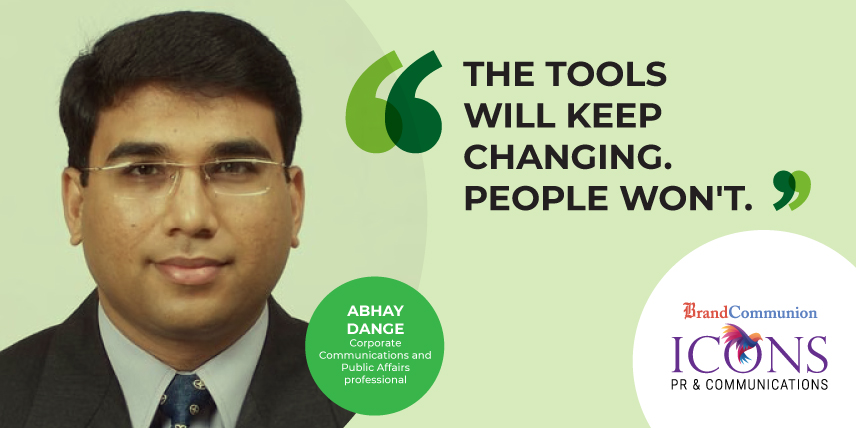
The tools will keep changing. People won't.
And that is why good communication will always remain less about technology and more about people.
Q: What is one piece of advice you would give to someone just entering the PR industry? And if given the chance, would you still choose a career in PR today?
People often ask me what it takes to build a successful career in communications. I don't think there is a formula, but after nearly three decades I have noticed one thing. The people who leave a lasting impression are rarely the ones who have all the answers. They are the ones who never stop asking questions.
I have had the privilege of working with some exceptional journalists, engineers, business leaders and policymakers. The quality that connected all of them wasn't intelligence, experience or even confidence. It was curiosity. They kept reading, listening, challenging assumptions and learning long after others believed they already knew enough. Of all the qualities I have seen, curiosity has had the longest shelf life.
If I were speaking to someone entering the profession today, I would probably tell them to spend less time trying to become visible and more time trying to become valuable. Read beyond communications. Understand business, technology, economics and public policy. Learn how organisations actually work before trying to explain them to the world. Good communication begins with understanding, not messaging.
One lesson the automotive industry taught me is that the loudest engine doesn't always win the race. The best cars are beautifully engineered beneath the surface. Careers are much the same. Build substance before visibility. Character before personal branding. Let your work speak before you do.
And yes, if I had the chance to begin again, I would choose this profession without hesitation. Very few careers allow you to sit at the intersection of business, media, technology, government and society while history is unfolding around you. I came into this profession thinking I would learn about communications. What it really taught me was how people think, how organisations make decisions and why understanding people is the foundation of every lasting reputation.
Q: What is one common misconception about PR that you would like to correct?
The biggest misconception about PR is that it is about getting media coverage.
That is a bit like believing a great drive is simply about pressing the accelerator.
Anybody can make a car go faster for a few seconds.
The real skill lies in knowing when to accelerate, when to brake, when to change gears and, most importantly, how to read the road ahead.
Communications works exactly the same way.
People see the headline, the interview or the social media post and assume that is the work. In reality, those are simply the visible outcomes. The real work happens much earlier. Understanding different perspectives. Asking difficult questions. Preparing for difficult conversations. Helping leaders make better decisions long before they are tested in public.
One lesson the automotive industry teaches you is that the best drivers rarely make dramatic corrections. They are constantly making small adjustments that nobody notices. Good communication is no different. It is not about reacting brilliantly when a crisis arrives. It is about anticipating the bend before everyone else sees it and making small corrections early enough that the journey remains smooth.
That is why I have always believed PR is less about publicity and more about judgement. Publicity may win attention for a day. Sound judgement protects reputation for years.
Ironically, some of the best communications work is never seen because nothing went wrong.
Rather like good brakes.
Nobody talks about them on a smooth journey.
Everyone depends on them when the unexpected happens.
Q: Where do you see the PR industry heading in the next five years?
People debate whether Artificial Intelligence will redefine communications.
I think it already has.
During my career, I have watched communications reinvent itself many times. Fax gave way to email. Websites replaced brochures. Social media changed influence. Creators reshaped journalism. Every wave transformed the tools we used. None changed the responsibility that came with using them. Artificial Intelligence is simply the next, and probably the biggest, chapter in that journey.
Artificial Intelligence will undoubtedly make our work faster. It will research in seconds, analyse patterns instantly and generate content at remarkable speed. That is an extraordinary advantage. But communications has never been about who reaches the destination first. It has always been about making the right decisions along the way.
The automotive industry taught me something I have never forgotten. Every generation of cars became faster, safer and smarter than the one before. Yet the machines were never the real differentiator. The difference was always the person behind the wheel. The best drivers were never remembered because they had more horsepower. They were remembered because they read the road better, anticipated what others couldn't see, adapted to changing conditions and consistently made better decisions. The more capable the machine became, the more valuable those human qualities became.
Artificial Intelligence is taking communications in exactly the same direction. It will give every communicator more horsepower than ever before. But horsepower has never been the difference between a good driver and a great one. The more powerful the machine becomes, the more valuable judgement, perspective and experience become.
Artificial Intelligence will become the most powerful tool communications has ever seen.
Human judgement will remain its greatest competitive advantage.
When everyone has access to the same technology, the real difference will no longer be the machine.
It will be the person behind the wheel.
Q: If your PR journey had a headline, what would it be?
“A Front-Row Seat to the Evolution of India's Automotive Industry”.
Looking back, that is probably the headline I would choose.
For over three decades, I had the privilege of witnessing one of the most remarkable transformations in Indian industry. I saw some of the world's most iconic and admired automotive companies establish and expand their presence in India. I saw manufacturing become world class, technology redefine mobility, consumer aspirations evolve, public policy reshape the industry and communications transform alongside it.
But looking back, cars were simply the backdrop.
The real story was always about people. Leaders with the courage to challenge convention. Engineers who transformed ideas into reality. Journalists who never stopped asking difficult questions. Policymakers who shaped the future. Customers whose aspirations constantly raised the bar.
I was fortunate to meet extraordinary people along the way. Mentors who believed in me. Colleagues who became lifelong friends. Journalists who challenged my thinking. Leaders who expected excellence. Every one of them left me wiser than they found me.
I also learnt that every long career introduces you to people who test your patience, your judgement and your character. They teach valuable lessons too.
I was fortunate to have a front-row seat to those conversations, those decisions and those defining moments. Sometimes as an observer. Often as a participant.
Looking back, I realise the greatest privilege of my career wasn't working with extraordinary cars. It was learning from extraordinary people.