

PR used to be about getting the story out. Today, it’s about shaping the story before it even begins.
As communication moves from the sidelines to the strategy room, its role has expanded far beyond press releases and media coverage. It now sits at the intersection of business, reputation, and purpose guiding how organisations think, act, and are perceived in a world that is always watching, reacting, and responding in real time.
In this conversation, Rachana Panda, VP & Cluster Communications Head for ASEAN, ANZ & South Asia at Bayer, and a seasoned PR & Strategic Communication Advisor, takes us through a journey that mirrors this very evolution. Having worked across global powerhouses like Alcatel, Alstom, GE, and now Bayer, she brings a sharp, inside-out perspective on how communications has transformed from a support function into a strategic force.
Edited Excerpts:
Q: How did your journey in PR begin? Was it a conscious career choice or something you attribute to chance? Did your parents understand and support your decision at the time?
My journey into PR was shaped by curiosity about how communication builds perception and trust. I started as a management trainee, where I discovered the power of storytelling in business, and later worked on development projects that showed me how communication can drive societal impact.
My time at Alcatel during the telecom boom exposed me to rapid innovation, while Alstom expanded my perspective through large-scale infrastructure communications. At GE, one of the world’s most aspirational companies, I truly understood that communication is central to business strategy. Across these roles, I learned that influence comes from authenticity, clarity, and trust.
Personally, I was fortunate to have unwavering support from my parents, who encouraged my education and choices. From pursuing science and management to completing an advanced program alongside work, I’ve always believed that self-development is something you must take ownership of.
These experiences didn’t just build my résumé; they shaped how I listen, connect, and lead as a communications professional.
Q: What would you consider your defining moment or breakthrough in the industry?
Looking back, there wasn’t a single “big break,” but a few inflection points that reshaped how I viewed both my role and the profession. One defining phase was my time at GE, where I led communications and brand for South Asia. It was here that I saw communications embedded within the business engine helping influence decisions, not just package them.
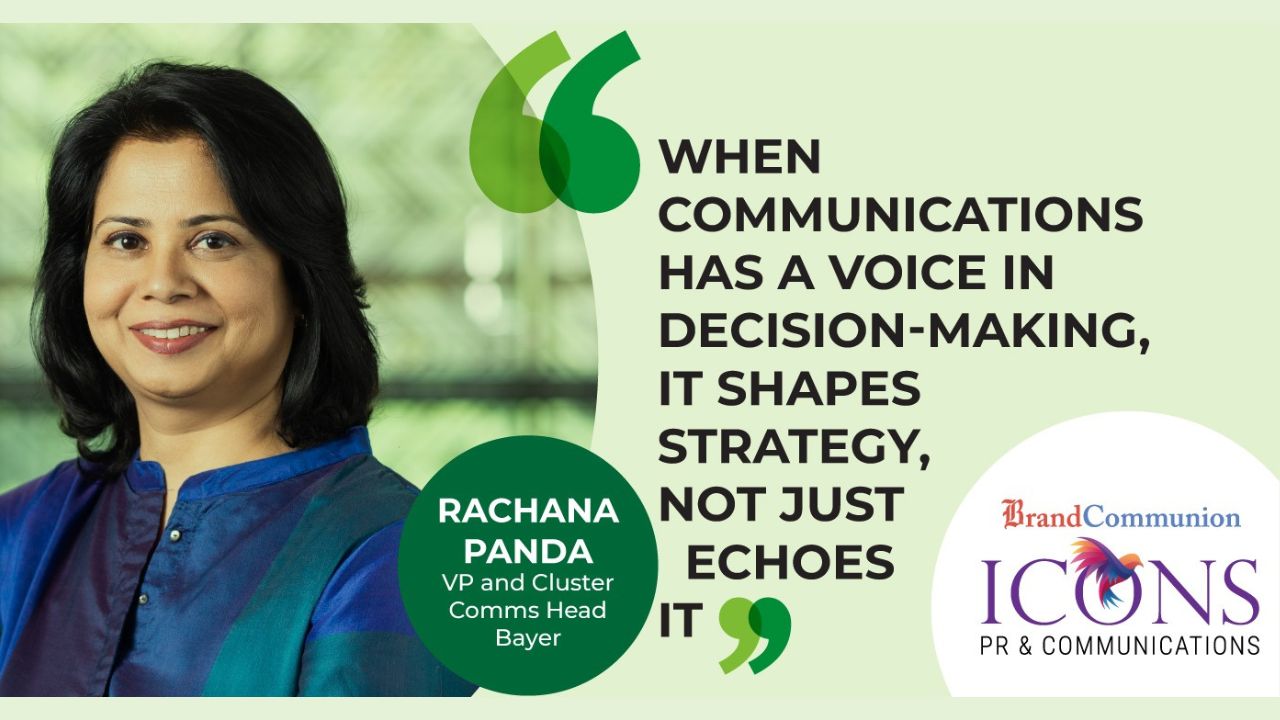
Working closely with leadership reinforced a key belief: when communications has a voice in decision-making, it can shape strategy, not merely echo it. That experience shifted my mindset from seeing PR as a support function to recognising it as a strategic driver, an approach that continues to guide how I build teams and functions today.
Another defining phase has been my current role at Bayer, which has deepened my belief in purpose-driven communications. Being part of an organisation with a mission like “Health for all, Hunger for none” shifts the focus beyond products and quarterly milestones to larger themes like access to healthcare, sustainable agriculture, and community well-being.
It pushes you to move beyond visibility and build long-term trust and impact. Representing this purpose across South Asia, ASEAN, and ANZ, and engaging with stakeholders from policymakers and farmers to women’s groups and young professionals, has reinforced why I chose to stay in this profession.
Q: Can you tell us about the toughest phase in your career, and what that period taught you?
The most demanding periods have been during crises, which forced me to build a different kind of muscle, staying calm under pressure, asking tough questions, and holding firm on values even when quick fixes are expected. These moments taught me that resilience in communications is less about having all the answers and more about thinking clearly, listening widely, and responding with integrity.
They also reshaped how I view influence within organisations. I realised our role isn’t just to execute, but to push back when needed—framing risks, challenging decisions constructively, and knowing when to speak up. Over time, I’ve learned that credibility is built long before a crisis through preparation, deep business understanding, and consistency. With that foundation, even the toughest situations can become opportunities to strengthen trust.
Q: How have you seen PR evolve from when you started to today’s digital-first world? What are some key changes that stand out to you?
When I started out, PR largely revolved around newsrooms and a few mass-media channels, with clear gatekeepers and a predictable rhythm. Today, that landscape has been completely transformed. With smartphones and social platforms, we’re in the age of the “citizen journalist,” where anyone can shape or disrupt a narrative in real time.
This shift has made the role both richer and more demanding. Digital platforms enable deeper engagement, sharper targeting, and real-time feedback, but they also bring constant noise, shorter attention spans, and the challenge of misinformation. PR has expanded far beyond media relations to include employees, regulators, investors, communities, and partners, with issues like sustainability and inclusion now central to reputation.
In many ways, the digital-first world has reinforced a core truth: PR is about earning trust—consistently, and through every interaction.
Q: What is one piece of advice you would give to someone just entering the PR industry? And if given the chance, would you still choose a career in PR today?
If I had to offer one message to someone starting out in PR, it would be this: treat curiosity, integrity, and humility as non-negotiables. Take time to understand the business, listen more than you speak, and build credibility by backing your recommendations with insight, not just instinct. Don’t wait to be invited into important conversations and earn your place through preparation and perspective.
Equally, see relationships and trust as long-term investments, not transactions. Nurture them well before you need them, and be someone others can rely on. Despite how demanding and fast-evolving this field is, I would still choose PR, it offers a front-row seat to change, the chance to shape meaningful conversations, and the satisfaction of making a real impact.
Q: What is one common misconception about PR/comms that you would like to correct?
A common misconception is that communications is mainly about polishing images, issuing press releases, and managing optics from the sidelines. In reality, when done right, it sits at the core of the business helping leaders anticipate stakeholder response, shaping how decisions are understood, and building the trust needed to navigate both opportunity and risk.
Another misunderstanding is that tools and technology define the power of PR. While digital platforms and AI amplify reach and efficiency, they are only enablers. What truly sets the function apart is human judgement, empathy, the ability to listen deeply, and the courage to offer honest counsel—even when it’s uncomfortable. That’s what transforms PR from a support role into a strategic partner.
Q: Where do you see the PR industry heading in the next five years?
Looking ahead, PR will become even more deeply embedded in how organisations operate, not just how they are perceived. As data, analytics, and AI evolve, the function will be expected to bring sharp, evidence-based insights to the leadership table shaping decisions, not just communicating them. At the same time, audiences will demand highly tailored communication: the right message, in the right format, on the right platform, for each stakeholder group.
Purpose and accountability will also define the next phase of the profession. Stakeholders will increasingly scrutinise how organisations act on issues like climate, equity, ethics, and community impact, judging them on whether actions align with words. PR teams will need to balance storytelling with stewardship ensuring credibility, and responding with speed, transparency, and humanity when it matters most.
Q: If your PR journey had a headline, what would it be?
It would be: Shaping Business outcomes with Purpose, Not Just Narratives