

In a field shaped by perception, powered by storytelling sustained by trust, certain leaders distinguish themselves by creating narratives that leave a lasting impact.
Through Brand Communion’s Icons 2026, we recognise individuals whose careers have not only flourished but have also influenced the direction of India’s PR and communications industry.
This series looks beyond titles and achievements. It focuses on the journeys behind them, examining where these leaders started, the key turning points that defined their paths, and the obstacles they had to overcome. It also highlights how they’ve responded to shifting industry dynamics and adapted to an ever-changing landscape.
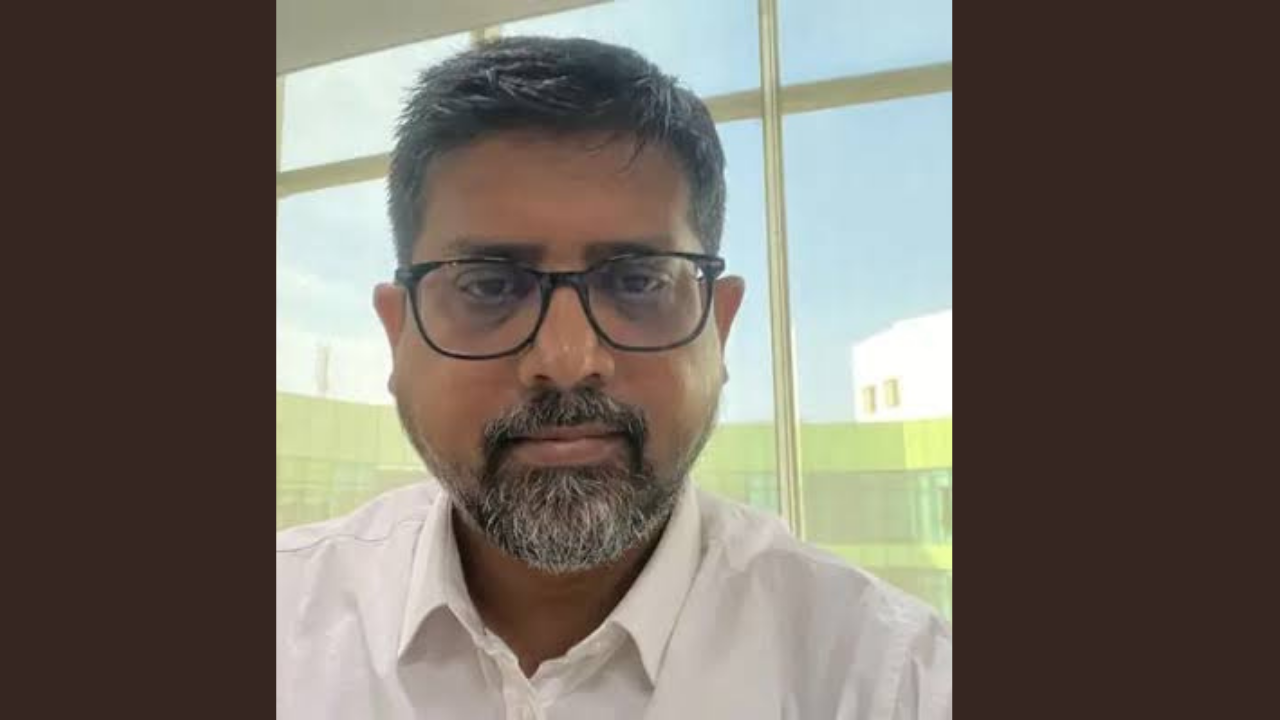
In this conversation, Aman Dhall reflects his early journey in PR, the defining experiences that shaped his perspective, and the key decisions that helped him carve a distinct identity in an ever-evolving industry.
Edited Excerpts:
Q: How did your journey in PR begin? Was it a conscious career choice or something you attribute to chance? Did your parents understand and support your decision at the time?
I didn’t plan to be in PR. I set out to tell stories and PR became the most powerful arena to do that at scale.
My journey began at SGTB Khalsa College, Delhi University, where I chose journalism. Under mentors like Novy Kapadia and Smita Mishra, I learned not just writing, but how to observe, question, and find meaning in everyday narratives.
That foundation took me to Pioneer Media School and into newsrooms at Vijay Times and The Economic Times. Reporting across beats—manufacturing, defence, retail, politics, sport, and financial services shaped how I understand markets, founders, and the stories behind the numbers.
Over time, one idea became clear: narrative doesn’t just describe value, it shapes behaviour and perception.
I carried that insight into corporate communications at Policybazaar, then a young startup. What I witnessed was not just business growth, but the building of belief. I remain grateful to Yashish Dahiya and Naveen Kukreja for that opportunity. From a $100 million valuation to becoming a multi-billion-dollar public company, every press release, challenge, and stakeholder interaction reinforced the power of thoughtful, strategic communication.
Then came 2020. As the world paused, a question emerged: what if storytelling for businesses could be done differently?
That question became CommsCredible built on a simple belief that India’s high-growth companies need more than visibility. They need credible, memorable narratives that build lasting brand equity, not just in search, but in the minds of stakeholders.
Q: What would you consider your defining moment or breakthrough in the industry?
There wasn’t a single breakthrough moment. In hindsight, it feels like every decision played its part.
Leaving a stable path in journalism to study sport management at Loughborough University, moving into grassroots sport development in the tribal regions of Odisha, and choosing to join a startup over more conventional opportunities -- each of these decisions didn’t look like breakthroughs at the time. They felt uncertain, even unconventional.
But each one added a layer of perspective.
Starting CommsCredible during COVID was another such moment. Not driven by timing, but by clarity. The early phase wasn’t about scale, it was about conviction. Saying no to work that didn’t align, focusing on narratives with depth, and building trust one story at a time.
Over time, the inflection point came when we saw our work move beyond media outcomes to influencing how founders think, how brands position themselves, and how sectors are understood. Building further on that belief, we started CommsCredible Venture Fund to support early-stage founders not just through storytelling, but also through capital and long-term alignment.
So when I look back, there isn’t one breakthrough. It’s a series of choices, often non-linear, that collectively shaped the journey.
Q: Can you tell us about the toughest phase in your career, and what that period taught you?
It’s difficult to point to one phase, because almost every transition came with its own challenges.
Moving from sport to studies, Moradabad to Delhi, stepping into journalism at The Economic Times, shifting from media to sport, working in grassroots development in the tribal regions of Odisha, and later moving into the startup ecosystem at Policybazaar, none of these were conventional or linear choices. Each phase brought uncertainty, self-doubt, and the need to constantly prove yourself in a new environment.
Starting CommsCredible during COVID was perhaps the most testing phase. Moving from a structured corporate role to building something from scratch when markets were uncertain meant there was no safety net. It required conviction without immediate validation.
What these phases collectively taught me is that clarity matters more than certainty. You rarely have all the answers when you make a decision, but you need to be clear about why you’re making it.
It also reinforced that careers are not built in straight lines. They are shaped by choices that may not make sense in the moment, but come together over time.
Above all, whether in journalism, startups, or entrepreneurship, trust remains the most valuable currency. Skills can be built, opportunities can change, but trust & credibility compound over time and become the foundation for everything else.
Q: How have you seen PR evolve from when you started to today’s digital-first world? What are some key changes that stand out to you?
In the early 2000s, PR was relationship-led, strong media access and a few well-placed stories could shape perception. By the 2010s, the focus shifted to scale, driven by digital, social, and always-on visibility.
Today, the focus is on genuine offline relationships, discoverability, and consistency across AEO and GEO. If your narrative isn’t structured, it won’t show up in AI answers, search results, or stakeholder conversations. At CommsCredible, we see this across fintech, retail, education, and sports—when the narrative is clear and consistent, itinfluences not just visibility, but hiring quality, investor perception, and even valuations.
PR is no longer about isolated moments; it’s about building systems. It operates across media, social, search, and founder voice as one integrated layer.
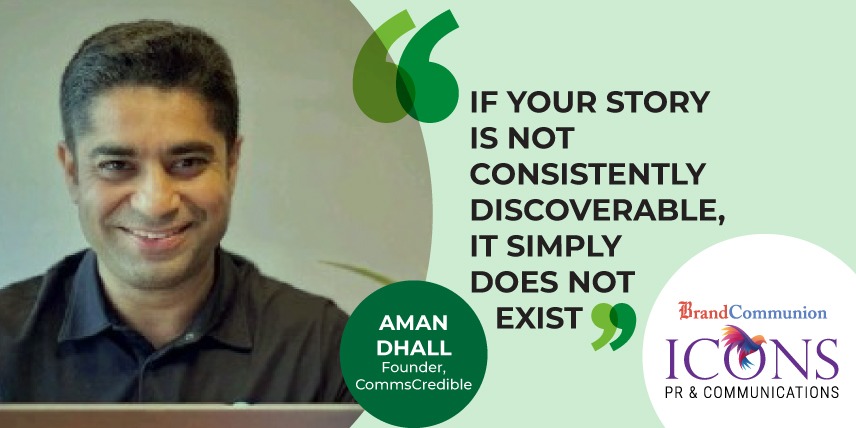
Because if your story isn’t consistently discoverable, it effectively doesn’t exist.
Q: What is one piece of advice you would give to someone just entering the PR industry? And if given the chance, would you still choose a career in PR today?
If you’re starting out in PR, don’t start with PR—start by understanding people, businesses, and how industries work.
Read widely. Write often. Meet people. Stay curious. The best communicators don’t just know journalists; they understand context, timing, and human behaviour. PR isn’t about pushing stories, it’s about earning attention and sustaining trust.
Build patience too. This is a compounding profession. The work you do today may not show results immediately, but over time, credibility becomes your biggest asset.
Would I choose PR again? Without hesitation.
At its best, PR sits at the intersection of business, storytelling, and influence. It shapes how companies are built, how leaders are perceived, and how decisions are made.
And that’s a responsibility worth choosing again.
Q: What is one common misconception about PR that you would like to correct?
The biggest misconception is that PR can change perception overnight—with one headline, a Page 1 story, or a viral campaign. It can’t.
Founders often walk in saying, “Let’s just get one big story and everything will change.” Teams chase virality, hoping a single moment will reset how the market sees them. It rarely works that way. A big story creates a spike in attention; a viral campaign trends briefly. But perception doesn’t shift in spikes, it shifts in patterns.
PR can amplify and sustain perception, but only when there’s substance underneath. If the narrative is weak or inconsistent, even the best coverage fades. People read it, acknowledge it, and move on.
The real shift happens through consistency, when your story shows up clearly across platforms, when journalists hear the same narrative over time, when a potential hire finds coherence, and when investors see alignment between what you say and what the market reflects.
That’s when perception starts compounding. PR is a long-term game. It rewards consistency, not shortcuts.
One story can get you noticed. But only a sustained narrative makes you believable.
Q: Where do you see the PR industry heading in the next five years?
Over the next five years, PR will become the bridge between online reputation and offline stakeholder confidence.
Today, opinions are formed online before any real-world interaction whether it’s hiring, investing, or partnerships. People search, scan, and validate. What shows up in that moment shapes what happens in the room. That’s where PR becomes critical.
It won’t just be about media coverage. It will be about building narratives that are consistently discoverable across search engines, AI platforms, and social ecosystems. AEO,GEO, content, and digital storytelling won’t operate in silos, they’ll merge into one integrated PR layer.
Because whether someone reads an article, visits your website, checks LinkedIn, or asks an AI tool, the story they find must feel aligned. If it doesn’t, trust breaks. If it does, confidence builds before the first conversation.
We’re already seeing this shift. Companies with clear, consistent narratives aren’t just more visible, they’re more trusted. They hire better, raise better, and close faster because belief is already in place.
Q: If your PR journey had a headline, what would it be?
Actual Intelligence Matters: Because Trust, Reputation & Relationships Can’t Be Automated.