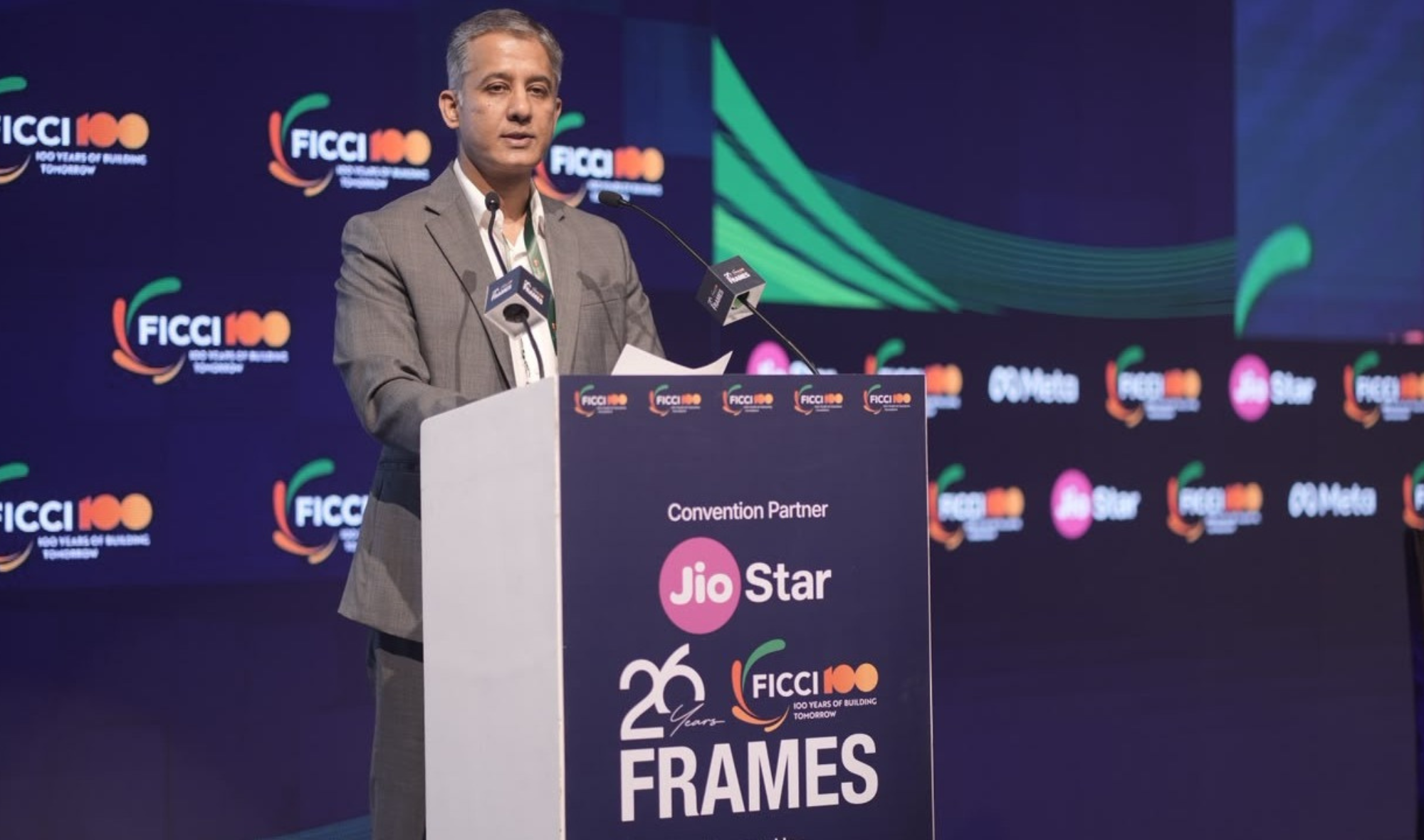


JioStar CEO Kevin Vaz has called for the immediate restoration of BARC audience ratings, saying the continued absence of credible and verifiable television audience data is creating uncertainty for broadcasters, advertisers and agencies, particularly ahead of the festive season.
Speaking at the inaugural address of FICCI FRAMES 2026 on September 29, Vaz said reliable measurement remains critical for brands to plan campaigns and reach audiences efficiently.
“The industry strongly urges the Ministry to restore the release of BARC audience ratings immediately,” Vaz said, pointing to the importance of credible audience measurement for the wider broadcasting and advertising ecosystem.
On removal of 12-minute ad cap
On regulation, Vaz welcomed the Ministry of Information & Broadcasting's removal of the 12-minute advertising cap, calling it an important step towards a regulatory framework that reflects the changing realities of linear broadcasting and the wider media landscape.
He also called for a broader reduction in the regulatory burden and cost associated with linear broadcasting, arguing that the medium needs room to evolve alongside digital platforms.
Vaz said self-regulation and industry best practices should remain central as the sector moves into its next phase of growth.
CTV brings TV scale and digital capabilities
Vaz pointed to the broader evolution of television, arguing that the industry is no longer dealing with a simple divide between linear TV and digital. Instead, television, streaming, mobile and connected TV are increasingly converging.
He highlighted connected TV as one of the key opportunities emerging from this convergence. He cited industry estimates putting India's CTV universe at more than 200 million viewers, with over 80% of CTV viewing taking place with family or friends.
According to Vaz, CTV combines the scale and shared viewing experience of the large screen with digital capabilities such as personalisation, addressability and measurability.
He also pointed to TATA IPL 2026, which he said reached more than 1.2 billion viewers, as an example of how television, streaming, sport and technology are increasingly coming together at scale.
“The opportunity is not to choose between screens, but to give audiences the freedom to move seamlessly across screens, while giving the industry better ways to understand and serve those audiences,” Vaz said.
Micro-drama opens up a new creator economy
The shift is also visible in the formats being produced for digital audiences. Vaz highlighted micro-drama, pegging the category at Rs 650 crore in 2025 and projecting annual growth of more than 50% through 2028.
He pointed to JioStar's entry into the space through TADKA, along with its engagement with more than 50 production houses, as an example of how newer formats could broaden the production ecosystem.
AI brings new opportunities, but raises creator concerns
Vaz also addressed the growing role of AI across the media and entertainment ecosystem, from production and storytelling to workflows, analytics and personalisation.
While he acknowledged the technology's potential to expand what is possible, he stressed that the human being should remain at the centre of the creative ecosystem.
He called for greater clarity around copyright, consent, attribution and fair value for creators as AI adoption grows.