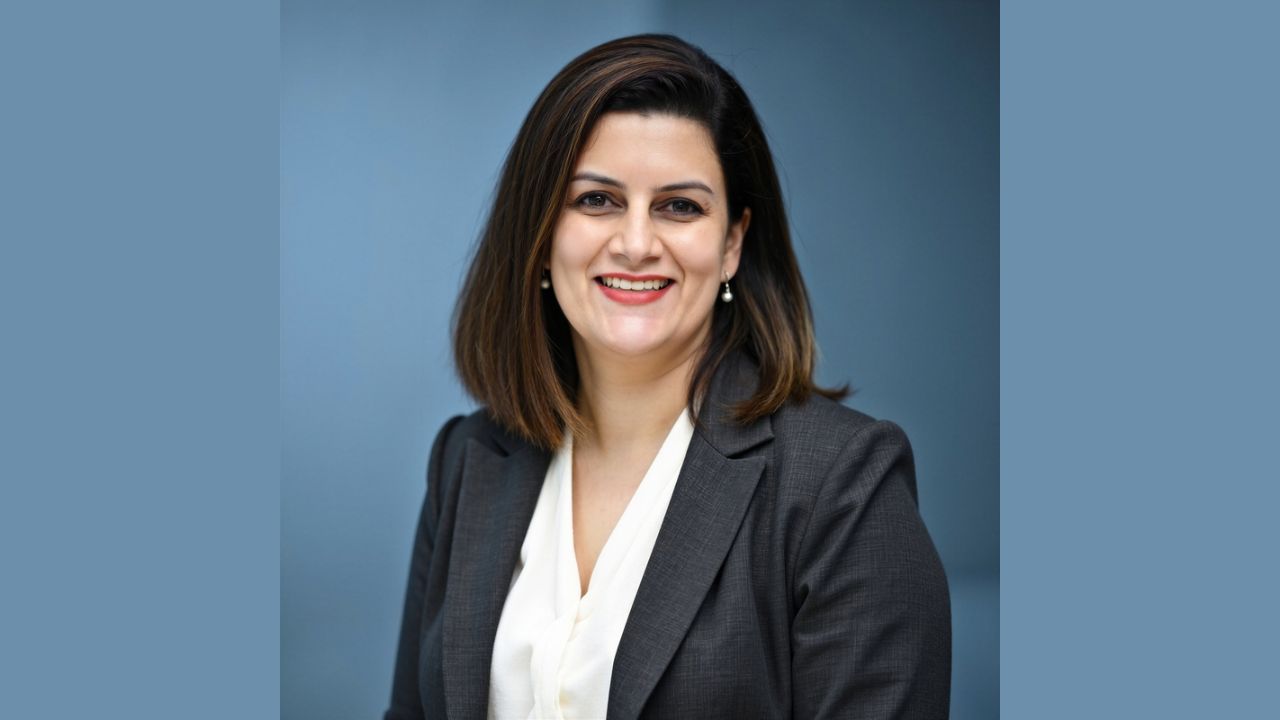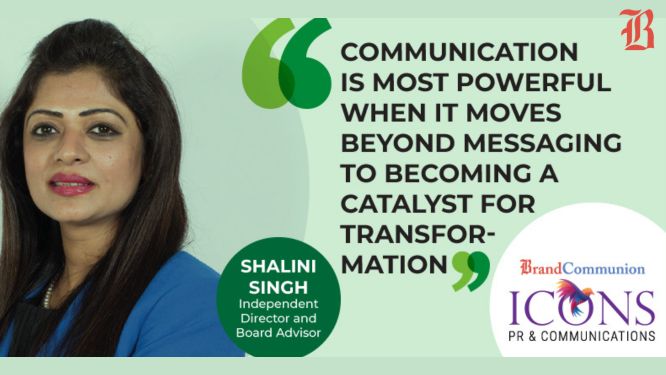


At a time when communications has evolved from a support function to a boardroom imperative, Shalini Singh stands as a testament to that transformation. An Independent Director and Board Advisor, Singh has spent decades shaping narratives that go beyond publicity driving trust, influencing stakeholder perception, and aligning communication with business strategy.
From her early days at Arvind Mills and Airtel to leading high-impact initiatives at Tata Power and steering complex transitions like the Holcim India to Adani Group acquisition, her journey mirrors the evolution of the PR industry itself.
In this conversation, she reflects on her career milestones, the shifting dynamics of modern communications, and why the future of PR lies at the intersection of reputation, technology, and purpose.
Edited Excerpts:
Q: How did your journey in PR begin? Was it a conscious career choice or chance? Did your parents support it?
My journey into communications was very much a conscious choice, rooted in both academic curiosity and a deep interest in how narratives shape perception and influence behaviour. Pursuing a Master’s in Communications from M.S. University, Baroda, where I graduated as a gold medalist, gave me a strong theoretical foundation but it was my early roles at Arvind Mills and later Airtel that brought that learning to life.
At that time, communications was not as clearly defined a career path as it is today. My parents, like many others, initially viewed it as unconventional. But over time, as they saw the impact and scale of the work,from brand building to national campaigns they became incredibly supportive.
In many ways, my journey reflects the evolution of the profession itself from being seen as peripheral to becoming central to business strategy.
Q: What would you consider your defining moment or breakthrough?
A defining moment in my career came at Tata Power, where I integrated sustainability, communications, and business strategy into one unified narrative. Leading Club Enerji, which impacted over 23 million citizens and became a case study at IIM Ahmedabad, showed me that communications can drive large-scale behavioural change while creating real business and societal value.
It reinforced my belief that communication is most powerful when it goes beyond messaging to become a catalyst for transformation.
Q: Can you tell us about the toughest phase in your career and what that period taught you?
One of the toughest phases in my career was navigating high-stakes transitions, particularly the acquisition of Holcim India, including ACC and Ambuja Cements, by the Adani Group, one of the decade’s largest deals.
Managing communication across employees, investors, regulators, and media during this transition required not just precision, but empathy and clarity amid uncertainty. It reinforced that in moments of ambiguity, communication is not just about information, it’s about building reassurance and trust, while managing emotions, expectations, and stakeholder confidence.
Q: How has PR evolved from when you started to today’s digital-first world?
The evolution has been profound. When I started, PR was largely media-led and focused on controlled messaging. Today, we operate in a real-time, always-on, stakeholder-driven ecosystem where narratives are co-created, not controlled.
At organisations like Tata Power, Holcim India, and RPG Group, I have led the shift toward integrated, digital-first communications leveraging AI, analytics, and multi-platform storytelling to build engagement and credibility at scale. The most significant shift, however, is that trust has emerged as the ultimate currency. In a world of information overload, organisations that communicate with authenticity, purpose, and transparency will stand out.
Q: What is one piece of advice you would give to someone just entering the PR industry? And if given the chance, would you still choose a career in PR today?
My advice would be simple: don’t just learn how to communicate, learn how business works. The most effective communications professionals today are those who understand strategy, finance, ESG, and stakeholder dynamics. Communication is no longer a support function, it is a business function.
And yes, I would absolutely choose this career again, perhaps even more so today. The scope, impact, and relevance of Strategic communications have never been greater. It sits at the intersection of reputation, risk and value creation, making it one of the most exciting and influential roles in any organisation.
Q: What is one common misconception about PR that you would like to correct?
One of the most common misconceptions is that PR is about visibility or publicity. In reality, PR is about credibility and trust.
It is not about how often you are seen, it is about how you are perceived when it matters most, especially during moments of crisis, transition, or scrutiny. True PR is not about managing headlines; it is about safeguarding reputation and enabling long-term value.
Q: Where do you see the PR industry heading in the next five years?
The next five years will see PR evolve into a core strategic function that sits at the intersection of Reputation, technology and governance.
We will see:
- Greater integration of AI and data analytics in shaping narratives
- Stronger alignment with Stakeholders expectations
- A shift towards purpose led communications
- A shift toward reputation risk management at the board level
Communications leaders will increasingly act as enterprise advisors, helping organisations navigate complexity, build trust, and align purpose with performance.
Q: If your PR journey had a headline, what would it be?
“From Storytelling to Stewardship: Building Trust, Shaping Reputation, and Driving Purpose-Led Transformation.”