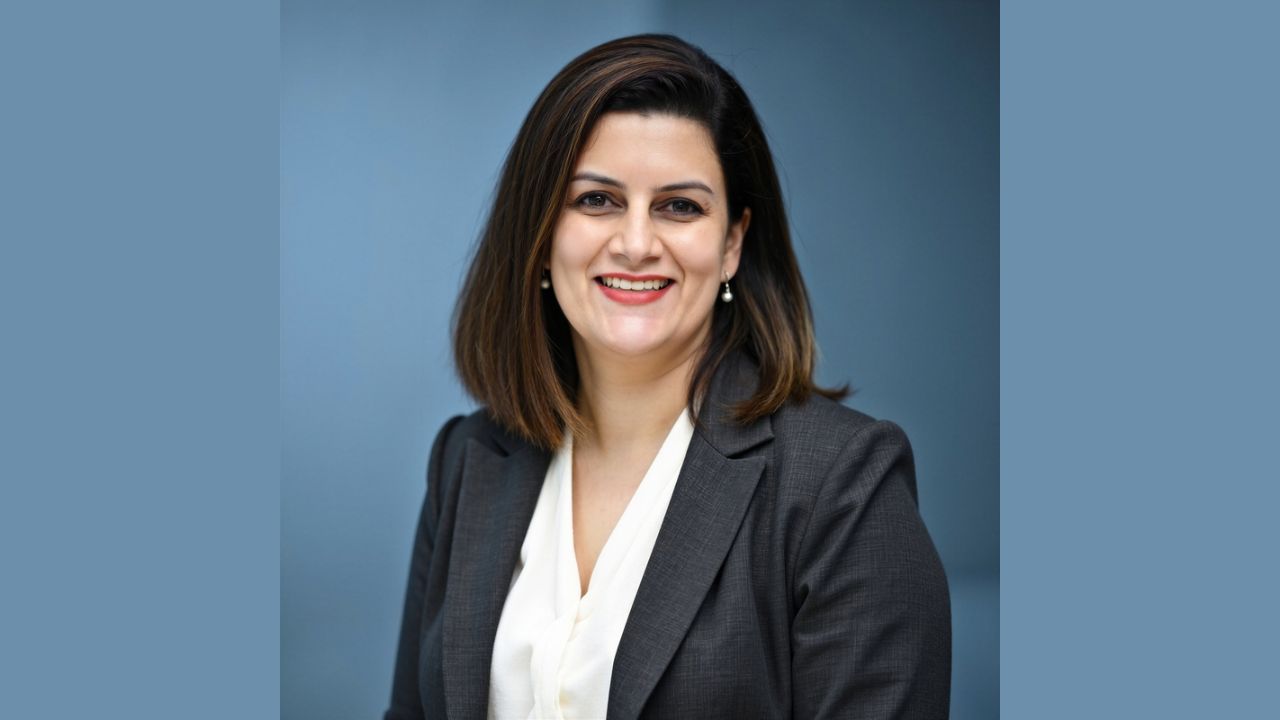


From navigating billion-dollar mergers and industry crises to balancing motherhood with midnight calls, Deepa reflects on the changing face of public relations, the emotional realities behind the profession, and why authenticity and trust will define PR in the age of AI.
In an industry built on perception, few people speak about public relations with the kind of honesty Deepa does. Her journey into PR wasn’t carefully mapped out on a vision board, it began with curiosity, instinct, and a career decision that quietly altered the course of her life.
From navigating billion-dollar mergers and high-stakes crises to balancing midnight calls with motherhood, Deepa has witnessed the communications industry evolve from the era of five newspapers and Doordarshan to today’s algorithm-driven attention economy.
Across decades of boardroom decisions, brand wars, and shifting media landscapes, one thing remained constant: the power of storytelling.
In this candid conversation, she reflects on the accidental beginnings of her career, the emotional cost of leadership, the realities behind PR’s glamorous reputation, and why truth may become the industry’s most valuable currency in the age of AI and deep fakes.
Edited Excerpts:
Q: How did your journey in PR begin? Was it a conscious career choice or something you attribute to chance? Did your parents understand and support your decision at the time?
Like many PR professionals of my generation, my journey was rather accidental. It was in 1994 when I was faced with a choice to join The Statesman and work in the team led by Raj Kamal Jha or join The Park Hotels and work with Vijay Dewan and Priya Paul.
On one hand was the much-coveted institution that shaped many Bengali minds and on the other was an industry that I had only seen from outside and I was clueless about PR.
It was a moment of curiosity about the profession that led me to opt for Public Relations. And it paid double of what a rookie journalist was making at that time.
No, my parents did not understand what I did. My Dad thought I was in the Guest Relations team. till a friend of his came and saw me at work, had tea in my office and reported back that I was head of a function. My Mum was very proud of what I did, not knowing entirely what my job entailed. But both were very supportive.
Q: What would you consider your defining moment or breakthrough in the industry?
For me it was a question that the CEO asked, “What do you think we should do Deepa?”.
PR is always seen as a fringe function and not at the core of the business hence this invitation was truly precious.
It came in the form of a special invitation by the Global deal team to sit in Global M&A meetings as the only representative from Comms; by being the only representative from Comms/ Country/ business in the Global CEOs Executive Fast track programme; by having your work recognised among 300 peers at a Global stage by the head of the function as ‘on strategy for over 18 months’! It came as a trust bridge in the “Check with Deepa” phrase for details on event planning, crisis management and employee outreach.
Q: Can you tell us about the toughest phase in your career, and what that period taught you?
The toughest phase was balancing motherhood and career living in Mumbai, raising a four-month-old away from family, and travelling constantly for work. It taught me the importance of building a strong “village” dependable help, supportive neighbours, friends who show up when needed, and a kind, hands-on partner.
Another unique challenge was having a spouse in the same profession. We often found ourselves on opposite sides of major crises like Indigo-SpiceJet or Airtel-Vodafone, handling situations from separate balconies in hushed tones. Strict disclosures and professional boundaries helped us navigate that space, even when he later became my agency partner.
The final and perhaps hardest phase was leading through the uncertainty of a merger while being personally impacted by it. It demanded integrity, confidentiality and emotional resilience at a time when teams were anxious and disconnected.
Our mantra was simple: “Do what is right for the team and the consumers.” In moments like these, you learn to take one day at a time and hold on to both sanity and purpose.
Q: How have you seen PR evolve from when you started to today’s digital-first world? What are some key changes that stand out to you?
When I started there were 5 papers, and DD was only one channel of information dissemination. From there to the current information overload, we have moved galaxies! From building relationships with a small set of journalists to help tell your stories we are now in an era where countless influencers inspire purchase decisions.
I was personally impressed with the way the function grew beyond supporting marketing to supporting HR, Legal, Regulatory and Compliance, CEO’s office. Today in some companies, it also manages Sustainability, CSR and Employee Communication.
Q: What is one piece of advice you would give to someone just entering the PR industry? And if given the chance, would you still choose a career in PR today?
Be nimble and humble at work. And party hard at play
Cause nothing is promised, not even a day.
I would always choose a career where I can be a storyteller with words, emotions and visuals.
Q: What is one common misconception about PR that you would like to correct?
Many candidates who wanted to join the profession believe that PR is glamorous. And more feel that in-house positions are easier than the work of an agency.
To both I say all PR professionals have mastered the art of making stomach aches (“what will be the headline in the pink paper tomorrow”), headaches (when crisis hits in the middle of a family function and you have to handle it), heartaches ( your budget, not deliverables, is cut despite the numerous awards you have won) and all other aches, seem easy with a graceful smile. This is why it is one of the most stressful professions in the world.
Q: Where do you see the PR industry heading in the next five years?
For the first time in a long time, predicting the future of PR is difficult. It belongs to those who can navigate “controlled chaos.” Yet, one thing will remain constant: storytelling. Whether through AI-generated characters or viral reels, authentic and clutter-breaking stories will continue to drive engagement and trust.
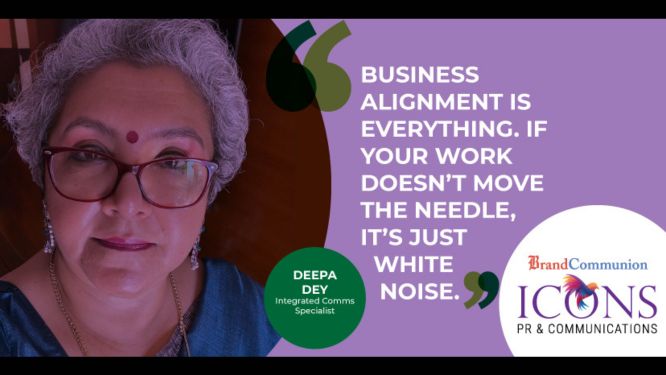
Going forward, PR will need to stay deeply aligned with business outcomes. If communication does not move the business needle, it risks becoming white noise. At the same time, truth itself will be constantly tested in a world shaped by deep fakes, AI-generated content and evolving regulation.
The next generation of storytellers will need to adapt quickly, upskill constantly, and become fact-checkers rather than fiction-makers. While technology will transform content, trust will still come from context, authenticity and attention to detail.
Q: If your PR journey had a headline, what would it be?
“She got shit done”.