

Public relations is a field where storytelling meets strategy and relationships shape outcomes. For most professionals, the path into PR isn’t clearly defined from the start, it takes shape through curiosity, varied experiences, and a deep understanding of people beyond just platforms and tools.
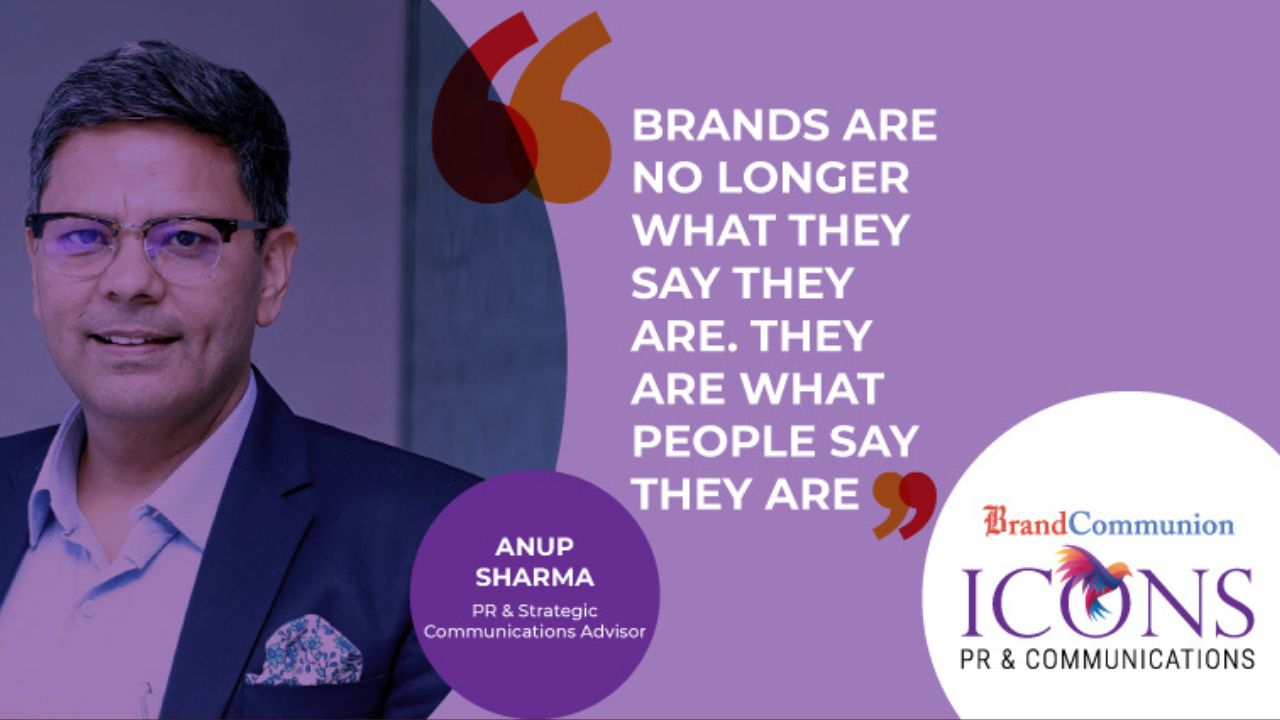
In this conversation, Anup Sharma, PR & Strategic Communication Advisor reflects on his three-decade-long career in communications spanning agency roles, independent consulting, and work across corporate, government, and development sectors.
Edited Excerpts:
Q. How did your journey in PR begin? Was it a conscious career choice or something you attribute to chance? Did your parents understand and support your decision at the time?
My entry into Public Relations was more of a lateral move than a planned decision. Although I pursued an MBA in advertising and PR, I began my career in integrated marketing and digital communications driven largely by curiosity rather than a fixed roadmap.
Growing up in a transferable environment due to my father’s role with the railways, I lived across multiple cities and even spent time in a boarding school in Mussoorie while he was on deputation in Nigeria.
This upbringing taught me early on how to observe, adapt, connect, and find a sense of belonging, skills that became my first lessons in communication and community building.
I later formalised my interest with a diploma in sales and marketing followed by an MBA specialising in advertising and PR. My natural inclination towards engaging with people and experimenting with ideas made the transition into PR feel intuitive.
At the time, PR wasn’t widely understood as a career. While my parents were initially curious, they became more supportive as they saw the impact of my work realising that communication goes beyond messaging to building influence, engagement, and trust.
Q: What would you consider your defining moment or breakthrough in the industry?
Over the last three decades, my journey has been one of continuous learning rather than a single defining breakthrough.
I spent the first 15 years in agencies and the next 15 as an independent consultant, working across global companies, Indian corporates, multilateral institutions, and government bodies each bringing its own complexity and insights.
Collaborations with organisations like Google, Coca-Cola, CNBC, as well as IFC, World Bank, UNICEF, WHO, and platforms like MyGov and the Ministry of Urban Development, helped me build a strong foundation across brand, corporate, policy, and public communication.
Two experiences stand out. The polio eradication campaign taught me how communication can drive real behaviour change through trust, partnerships, and consistent community engagement. The second was working on political campaigns with three Chief Ministers, which reinforced that communication is deeply contextual requiring alignment with leadership style, cultural nuances, and audience expectations.
Q. Can you tell us about the toughest phase in your career, and what that period taught you?
I’ve had the opportunity to work across diverse sectors, so I wouldn’t single out any one phase as the toughest but some assignments were particularly challenging.
One that stands out is my work with the Ministry of Housing and Urban Affairs. The key challenge was balancing the structured pace of government systems with the speed and efficiency expected in a corporate environment.
It involved working with sharp, detail-oriented senior bureaucrats while navigating multiple departments, approvals, stakeholders, and tight timelines.
Success in that setup required clear communication, patience with processes, and strong relationship-building across levels. Interestingly, my early life constantly moving cities and adapting to new environments played a big role in helping me build those connections and work effectively with diverse groups.
Q. How have you seen PR evolve from when you started to today’s digital first world? What are some key changes that stand out to you?
The evolution has been both significant and continuous.
I began with integrated marketing communications and early exposure to the internet during the dot-com phase, which gave me a strong foundation in how different disciplines and digital ecosystems come together.
Over time, three major shifts stand out. First, the move from silos to integration paid, earned, shared, and owned media now function as a connected system.
Second, the shift from information scarcity to overload today, the real challenge is capturing attention, with social media reshaping how narratives are created and perceived.
Third, the evolution of the role itself from execution to strategic advisory, where communication professionals are expected to align business priorities, policy context, and stakeholder engagement.
With the rise of artificial intelligence, this transformation is accelerating. The role is increasingly about interpreting knowledge, not just creating content.
Over the past 15 years as an independent consultant, my work has naturally evolved in this direction helping organisations align communication with business goals, stakeholders, and a rapidly changing, interconnected environment.
Q. What is one piece of advice you would give to someone just entering the PR industry? And if given the chance, would you still choose a career in PR today?
At its simplest, start by understanding people, not platforms.
There’s a growing focus on tools and formats, but communication at its core is about human behaviour.
Three things I would strongly recommend:
Build cultural understanding: India’s diversity means what works in one context may not work in another. Understanding people within their environment is critical.
Work with data, but think in stories: Data is everywhere; insight is what matters. The ability to translate data into meaningful narratives will be a key differentiator.
Stay adaptable: The industry is evolving rapidly. One day you may be working on a policy document, the next on a short-format video. Different formats, but the same need for clarity of thought.
I would also encourage young professionals to spend time on grassroots campaigns. That’s where you truly learn empathy and the essence of real communication.
And yes, I would absolutely choose this field again. Today, the role of communication professionals is far more strategic; we're not just telling stories, we’re helping shape decisions.
Finally, never underestimate the power of relationships and communities. Platforms like BAJAKO – Bihar & Jharkhand Community, Scribes, and Storytellers are built on this idea. When people come together, share experiences, and support each other, it creates long-term trust. That, ultimately, is communication at
its most fundamental level.
Q. What is one common misconception about PR that you would like to correct?
A common misconception is that PR is about managing media, it isn’t.
PR is about aligning perception with reality. If the reality itself isn’t strong, no amount of communication can sustain it. In today’s world, where everything is visible and amplified, authenticity isn’t optional, it’s essential.
Q. Where do you see the PR industry heading in the next five years?
Five years is a long horizon in today’s AI-led world, but one shift is already clear: the industry is moving towards a far more integrated and intelligent model.
The boundaries between paid, earned, shared, and owned media are dissolving, blending into one continuous system. Communication is no longer campaign-led; it is always-on, real-time, and shaped by multiple stakeholders simultaneously.
Artificial intelligence will significantly enhance listening, insights, and personalisation. But the real value will not lie in the tools, it will lie in how we translate data into meaningful engagement and stakeholder relevance.
There is also a clear shift towards advisory. Organisations are no longer just seeking execution support; they want partners who can align business priorities, policy context, stakeholder expectations, and narrative in an integrated way.
Most importantly, trust and transparency will become central. In a world of information overload, audiences will engage with what feels authentic, consistent, and credible.
My own journey has been evolving in this direction. After 15 years in agencies and another 15 as an independent consultant, it became clear that communication today is no longer siloed, it is network-driven and continuous.
This is what led to the creation of Quivora Advisory, not as a shift in direction, but as a natural consolidation of this evolution. A more structured approach to helping organisations align strategy, stakeholders, and narrative within a connected ecosystem.
Q. If your PR journey had a headline, what would it be?
From understanding people to building trust, shaping narratives across multiple stakeholders and in the process, constantly learning and sharing.