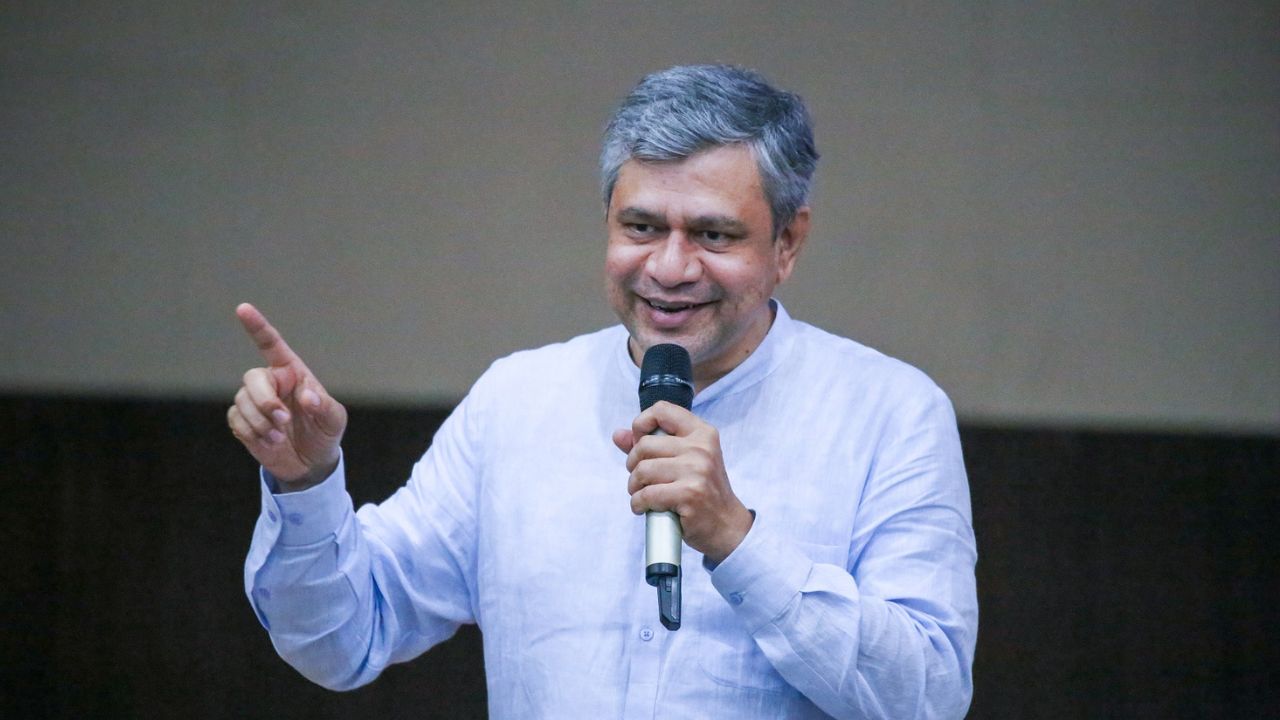


India could soon move towards a dedicated legal framework for artificial intelligence, with Union Minister for Electronics and Information Technology Ashwini Vaishnaw indicating that the country’s existing technology laws may no longer be adequate to govern the rapidly evolving AI ecosystem.
Speaking about the government's ongoing efforts to regulate emerging technologies, Vaishnaw said India is actively evaluating options for AI governance while continuing consultations with industry stakeholders. He noted that the Information Technology Act, 2000, was enacted in a vastly different technological environment and may not be sufficient to address the challenges posed by modern AI systems.
“Certain things have been done under the IT Act framework, but I do think that there is a requirement for a new law because the world of AI is very different from the world when the IT Act was enacted in 2000,” Vaishnaw said.
The minister's comments come amid growing global debates over how governments should regulate artificial intelligence without stifling innovation. According to Vaishnaw, India’s approach will seek to strike a balance between encouraging technological advancement and ensuring citizen safety.
“We are discussing with the industry… as always, our objective and approach will be to balance innovation and regulation in a manner that innovation keeps happening, while our citizens remain safe,” he said.
The discussion around AI regulation has gained urgency worldwide as concerns increase over deepfakes, misinformation, synthetic media, and the broader societal implications of increasingly sophisticated AI models.
India has already taken steps to strengthen oversight in this area. Earlier this year, the government introduced stricter compliance requirements for online platforms hosting AI-generated and synthetic content. Under the revised framework, platforms such as X and Instagram are required to remove flagged deepfake content within three hours when directed by a competent authority or court.
The government has also amended the Information Technology (Intermediary Guidelines and Digital Media Ethics Code) Rules, 2021, formally defining AI-generated and synthetic content. The revised provisions cover manipulated audio, visual, and audiovisual material designed to appear authentic, while exempting routine editing, accessibility enhancements, and legitimate educational or design-related uses.
Among the additional measures under consideration are mandatory and continuous labelling requirements for AI-generated content, enabling users to clearly identify synthetic media throughout its display.
As artificial intelligence increasingly becomes embedded in everyday digital infrastructure, policymakers are confronting a challenge that did not exist when the IT Act was drafted a quarter-century ago: how to regulate technologies capable of creating, imitating, and influencing content at unprecedented scale.
While the contours of a future AI law are yet to be defined, Vaishnaw’s remarks suggest that India may be preparing for its most significant overhaul of technology regulation since the enactment of the IT Act in 2000.