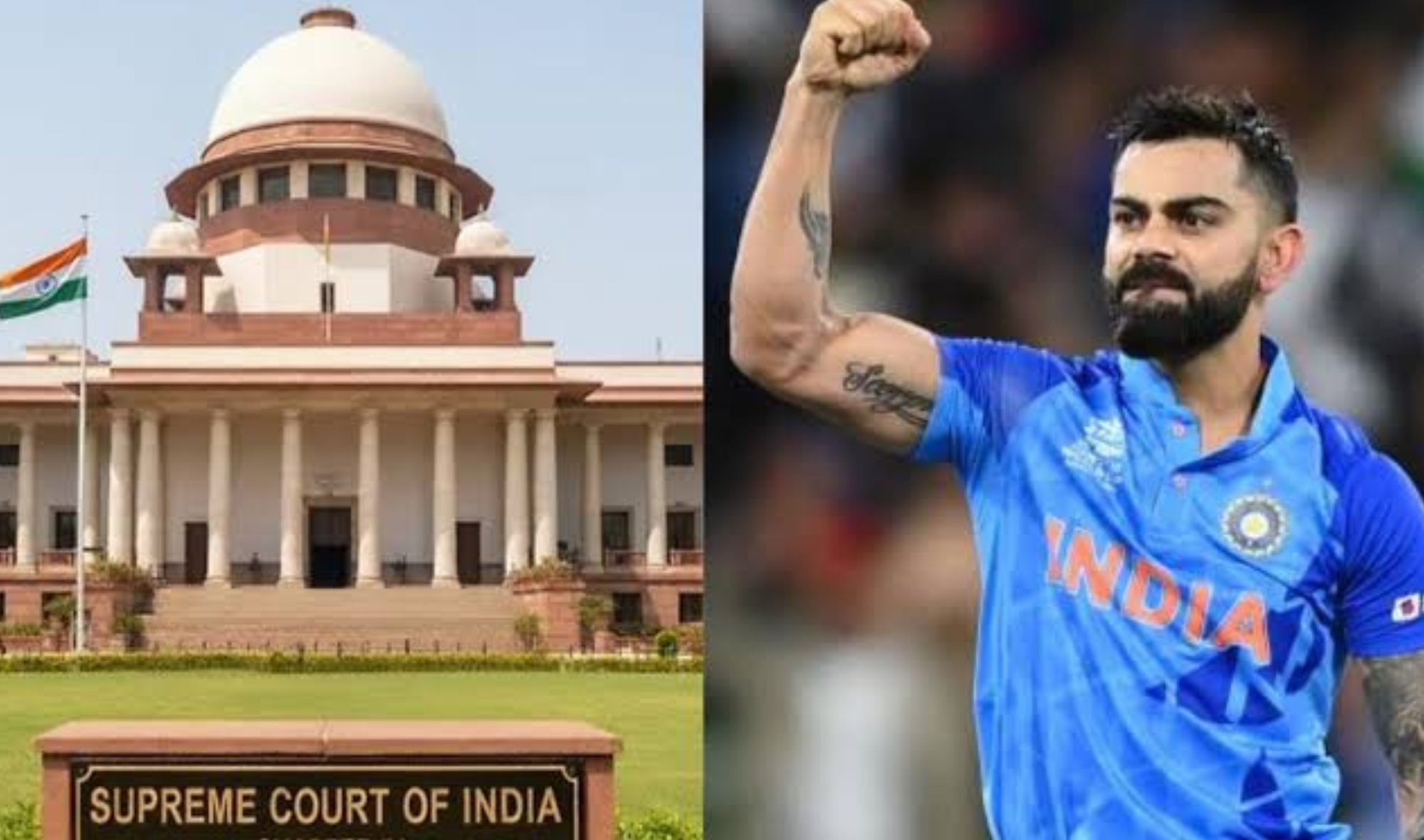


The Supreme Court has suggested involving cricketer Virat Kohli and other prominent personalities in print and television advertising campaigns to encourage people to celebrate Diwali without firecrackers. The Bench of Justices MM Sundresh and PB Varale, while hearing a case on firecracker restrictions, said it was not inclined to impose a blanket ban but warned that continued lapses in enforcement could prompt it to take a stricter position, Bar and Bench reported.
The Court said public awareness needed to complement regulatory measures, with advertisements highlighting alternative ways of celebrating the festival. It suggested approaching well-known cricketers to feature in campaigns promoting the spirit of Diwali without fireworks. The Bench also stressed the importance of educating children about how to celebrate festivals.
Acknowledging the public's sentiments around firecracker use during Diwali, the judges said a complete prohibition could have wider repercussions. However, they questioned the effectiveness of existing restrictions when authorities failed to ensure compliance on the ground.
The Bench sought details of the action taken by authorities following its October 15, 2025 order, which had temporarily permitted the sale and bursting of green firecrackers in Delhi-NCR during Diwali. The relaxation was granted on a trial basis and was subject to monitoring and enforcement safeguards.
The amicus curiae informed the Court that authorities had not submitted a comprehensive report assessing the implementation of the order. She questioned the request for another relaxation without an evaluation of the previous year's exercise.
Additional Solicitor General Aishwarya Bhati, appearing for the Union and Delhi governments, said pollution levels had increased during the relaxation period. She informed the Bench that the Central Pollution Control Board had submitted air quality data, but enforcement-related information had not been placed before the Court.
The judges asked authorities to deploy officers to monitor compliance, particularly on days when firecracker use is permitted. They also suggested issuing challans, cancelling licences and initiating legal proceedings against violators.
Manufacturers oppose complete ban
Senior advocate Gopal Sankaranarayanan, appearing for the petitioners, alleged that firecracker restrictions had repeatedly been breached despite several orders and contempt proceedings. Referring to a CBI report, he told the Court that manufacturers had procured substantial stocks of barium despite successive prohibitions.
He also raised concerns about the lasting impact of firecracker pollution, including PM2.5 particles remaining suspended in the air, alleged child labour in the industry, the use of toxic substances and deaths and injuries mentioned in the petitioners' latest application.
Senior advocate J Sai Deepak, representing certain firecracker manufacturers, opposed a complete ban, arguing that prohibition had encouraged black-market sales, Chinese products and unlicensed goods.
He instead called for stricter regulation, including public disclosure of licence and manufacturing-site details, QR code verification and cancellation of licences for violations.
The proceedings relate to a 2015 case concerning restrictions on firecracker use in Delhi and other northern states affected by air pollution between October and January. The Supreme Court had earlier imposed restrictions, including a ban on firecrackers in Delhi, before allowing the limited relaxation for green firecrackers in 2025.