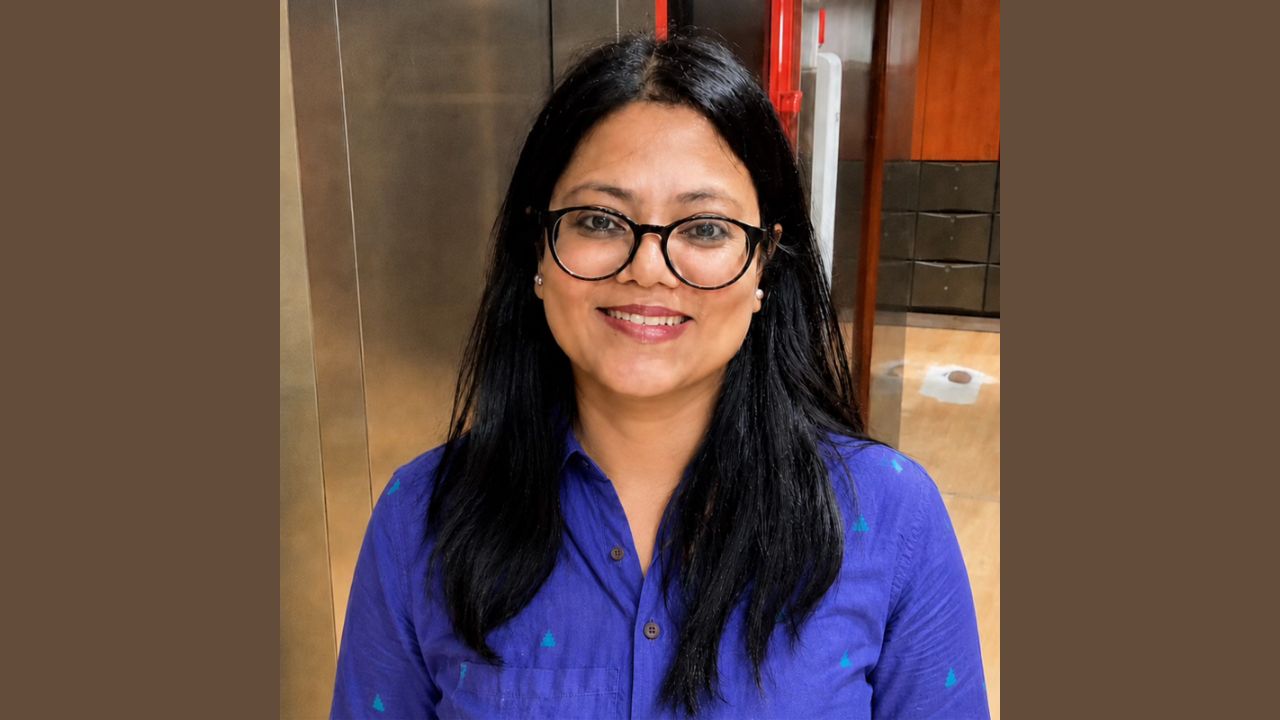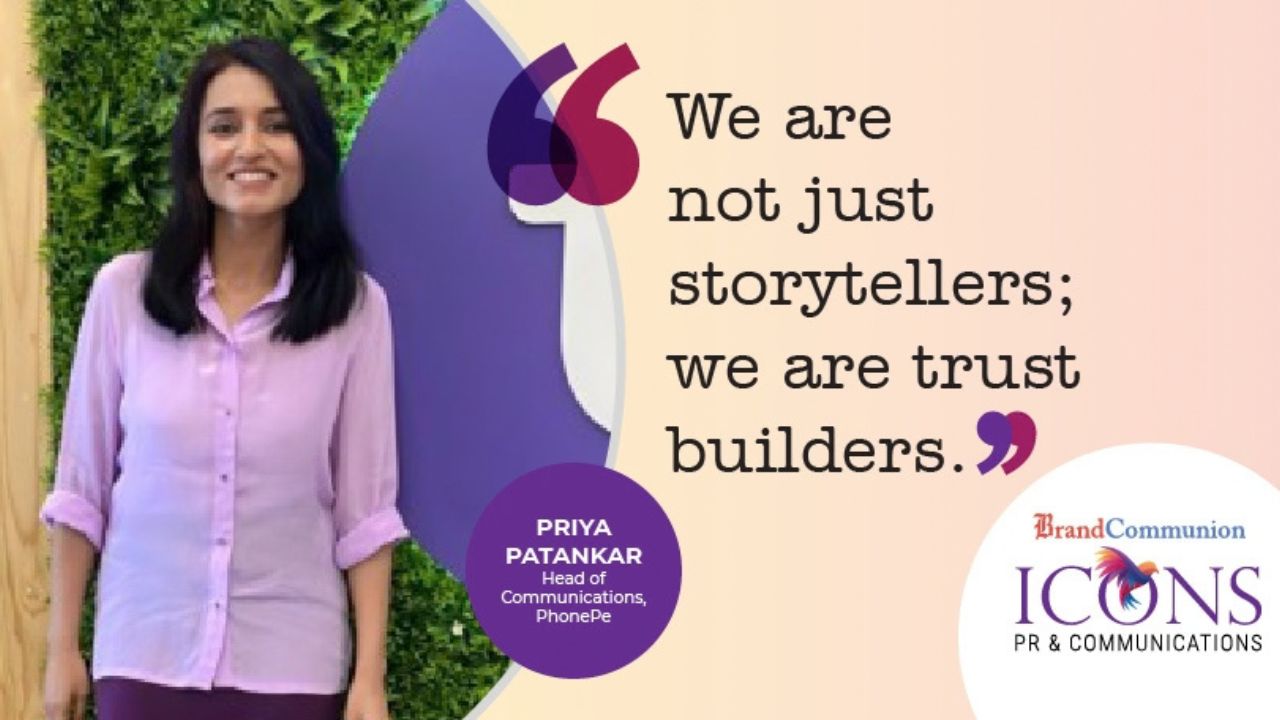


For Priya Patankar, Head of Communications at PhonePe, a career in PR was not part of a conventional plan. Her professional journey began across content, marketing communications and demand generation before she found her calling in public relations, drawn by the power of storytelling to shape perceptions and influence conversations.
In the latest edition of PR Icon, Patankar reflects on building PhonePe's PR and communications function from the ground up as the company's first employee in the team, at a time when India's digital payments ecosystem was still taking shape.
She discusses the challenges of creating a communications playbook without established templates, and how the experience shaped her approach to navigating ambiguity and fast-changing business environments.
Patankar also opens up about taking a career break to work from home after the birth of her son, returning to a professional landscape that had moved on, and rebuilding her career from the ground up. The experience, she says, gave her resilience, discipline and a stronger understanding of boundaries.
Looking at the evolution of PR, Patankar believes the industry has moved from a model where communicators could influence narratives through a defined set of media channels to one where audiences actively shape the conversation. She argues that PR professionals need to work closely with business and product teams to understand commercial realities, while building credibility across an increasingly fragmented media ecosystem.
Edited Excerpts:
Q: How did your journey in PR begin? Was it a conscious career choice or something you attribute to chance? Did your parents understand and support your decision at the time?
If I had to describe my foray into PR it would be characterised as ‘Chance, with a side of Stubbornness.’ I started out over two decades ago, at a time when the boundaries between content, PR, marketing communications and internal comms were beautifully blurred - which, in hindsight, was the best thing that could have happened to me. I got to dabble in all of it as a young professional, which gave me a breadth that I still draw on today.
But the throughline was always storytelling. I was obsessed with the idea that words could move people, shift perceptions, even change the world. PR turned out to be the discipline where that instinct had the most room to grow, I just had to find my way there through content, marketing and demand generation first.
As for my parents, they had a very different script in mind. I come from a family of doctors, engineers and teachers, and that's largely stayed true across generations. The idea of their daughter choosing a career in communications wasn't exactly in the playbook. It took them a while to come around, but they did. And I'd like to think I've made a reasonable case for the profession
Q: What would you consider your defining moment or breakthrough in the industry?
Building the PR and Communications function at PhonePe from the ground up as the first employee on that team, nearly a decade ago. I had the rare opportunity to define the external communications playbook for a company that has since become synonymous with digital payments in India. That's not something I take lightly.
It was a steep learning curve on multiple fronts. The fintech and payments industry was evolving at breakneck speed, and I was simultaneously finding my own footing in PR, having come from marketing, CRM and demand generation. There were no templates to follow. You had to think on your feet, build as you flew, and get comfortable with ambiguity very quickly. Looking back, it shaped everything about how I approach communications today.
Q: Can you tell us about the toughest phase in your career, and what that period taught you?
I made a conscious decision to work from home for a few years after my son was born. Two decades ago, that wasn't the norm. Finding employers willing to offer remote or flexible arrangements was genuinely hard, and returning to full-time in-office employment afterwards was even harder. I had to start over, almost from scratch, and rebuild my footing in a profession that had moved on without waiting for me.
But here's what that period gave me - discipline, resilience and a very clear understanding of boundaries. Managing a young child while delivering on work teaches you to be ruthless with your time and intentional about your energy. When the world scrambled to adapt to remote work during COVID, I realised I had been quietly rehearsing for it for years. Having climbed back up once before, I knew that no setback is permanent; you just must be willing to adapt faster than the world moves.
Q: How have you seen PR evolve from when you started to today's digital-first world? What are some key changes that stand out to you?
The most fundamental shift is that we no longer control the narrative, we participate in it. When I started out, there was a relatively clear hierarchy of voices and channels. Today, a Reddit thread can shape public perception faster than, say, an official company press release, a Reels creator can move opinion more effectively than a front-page feature, and audiences, often younger, more sceptical, and more informed, are drawing their own conclusions from sources we couldn't have anticipated even five years ago.
The line between traditional and new media is not just blurring, it's dissolving. A journalist today is also a podcaster, a newsletter writer, an X personality. An influencer sometimes breaks news before the newsroom. PR professionals who thrive in this environment are the ones who understand that earned media now lives everywhere, and that credibility is harder to build and easier to lose than ever before.
Q:What is one piece of advice you would give to someone just entering the PR industry? And if given the chance, would you still choose a career in PR today?
I would say there are two things which are important for anyone entering the industry. The first is to be genuinely curious. This can be about your client's business, the industry you are a part of, and about the world in general. PR is fundamentally about understanding what matters to someone else and finding the most compelling way to connect that to your story. If you treat it as purely a tactical exercise, you'll always be playing catch-up.
Second - and this is one I feel strongly about given my own career - find a way to work cross-functionally, formally or informally, as early as you can. Sit with the business and product teams
as often as you can. Understand how the product is built, how customers use it and the challenges business teams face meeting their numbers. It doesn't matter how you do it, just do it. Communications professionals who understand how a business runs, with the pressures and the trade-offs, are infinitely sharper than those who only ever see it from the PR desk. That perspective will serve you not just in your career, but in life.
And yes, without hesitation, I would choose this career again. It has never been boring. It has never stopped asking more of me and challenging me. That's a rare thing.
Q: What is one common misconception about PR that you would like to correct?
The one common misconception is that in many organisations PR is an afterthought and a nice-to-have, and something you think of once the ‘real’ business decisions have already been made. The assumption stems from the thinking that because PR deals in perception rather than product, it sits at the edges of business strategy rather than at the centre of it. And because it is harder to attach a rupee figure to a story than to a sales conversion, it gets treated as soft and important perhaps, but not essential.
That thinking is outdated, and frankly expensive. Consider this, a few well-placed stories at the right moment, say during a product launch, or market expansion can build credibility and reduce the friction a customer feels before trusting a brand with their money, or their loyalty. In a category like fintech, where trust is literally the product, the communications work you do in the early days shapes whether customers feel safe choosing you. That is not peripheral to the bottom line.
I saw this firsthand at PhonePe where during the early days, we weren't just announcing features, we were having a conversation with our customers around safety, reliability and scale at a time when digital payments were still earning public trust in India. The stories we told, the spokespeople we put forward, the way we showed up during moments of scrutiny, contributed to the brand equity that the company carries today.
Q: Where do you see the PR industry heading in the next five years?
There is a lot of conversation right now about AI replacing PR professionals, and I understand why. If you think of PR as primarily a writing or storytelling function, then yes, the anxiety makes sense. AI can draft, summarise, monitor and report at speed. However, this framing misses what PR people do.
We are not just storytellers, but we are trust builders. We are the ones who walk into a room, both literally or figuratively, and represent the soul of an organisation. We manage the relationship between a company and the world outside it, and that world is made up of journalists who need to believe you, customers who need to feel seen and be reassured, and employees who need to be inspired. There is no algorithm that can read the temperature of a press briefing gone sideways or know instinctively when to push a story and when to hold it back. Also, no AI can build the decade-long relationships that make a journalist pick up your call when it matters most.
What AI will do, and it is already doing, is free us from the parts of the job that consumed time and energy. Research, media monitoring, performance reporting, first-draft generation, these are areas where technology will make PR professionals significantly more efficient. It means more time for work that is irreducibly human, which includes judgement, strategy, relationships, and showing up in the moments that define how a brand is remembered.
The PR professionals who will lead this industry in five years are not the ones who fear AI, but they are the ones who learn to use it well, while doubling down on everything it cannot replicate.
Q: If your PR journey had a headline, what would it be?
“Two Decades, One Story, Zero Regrets.”