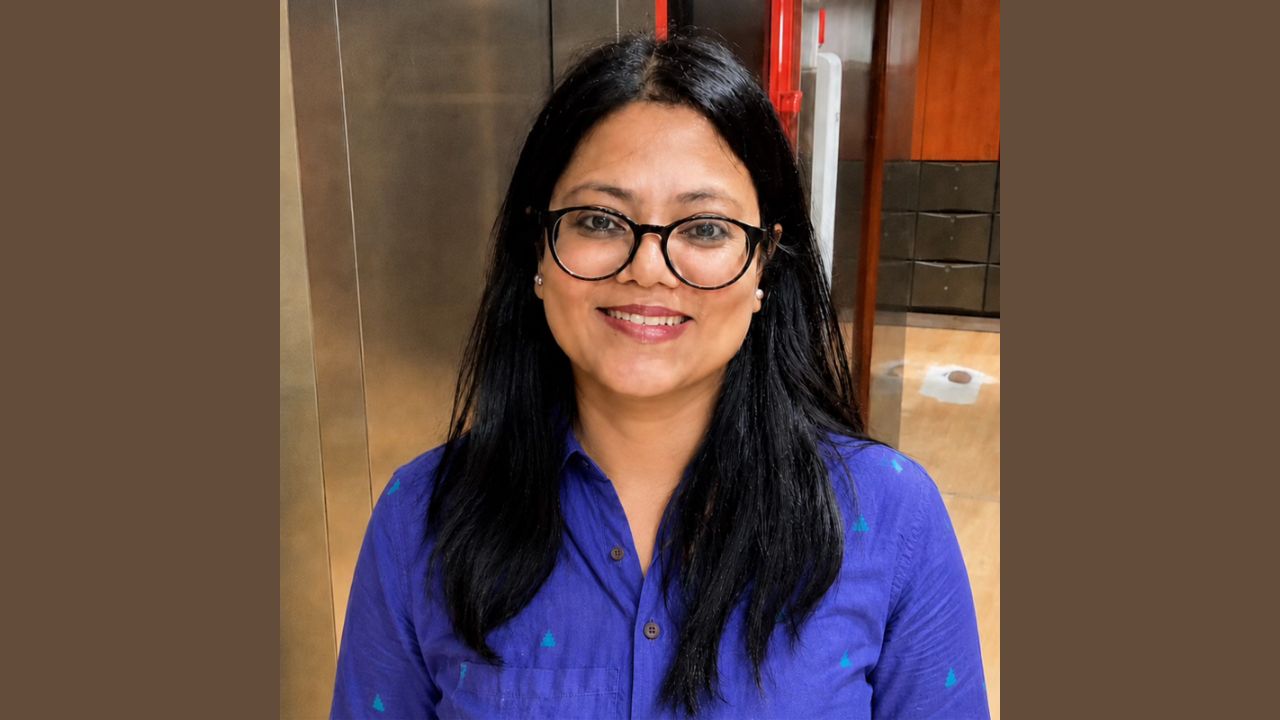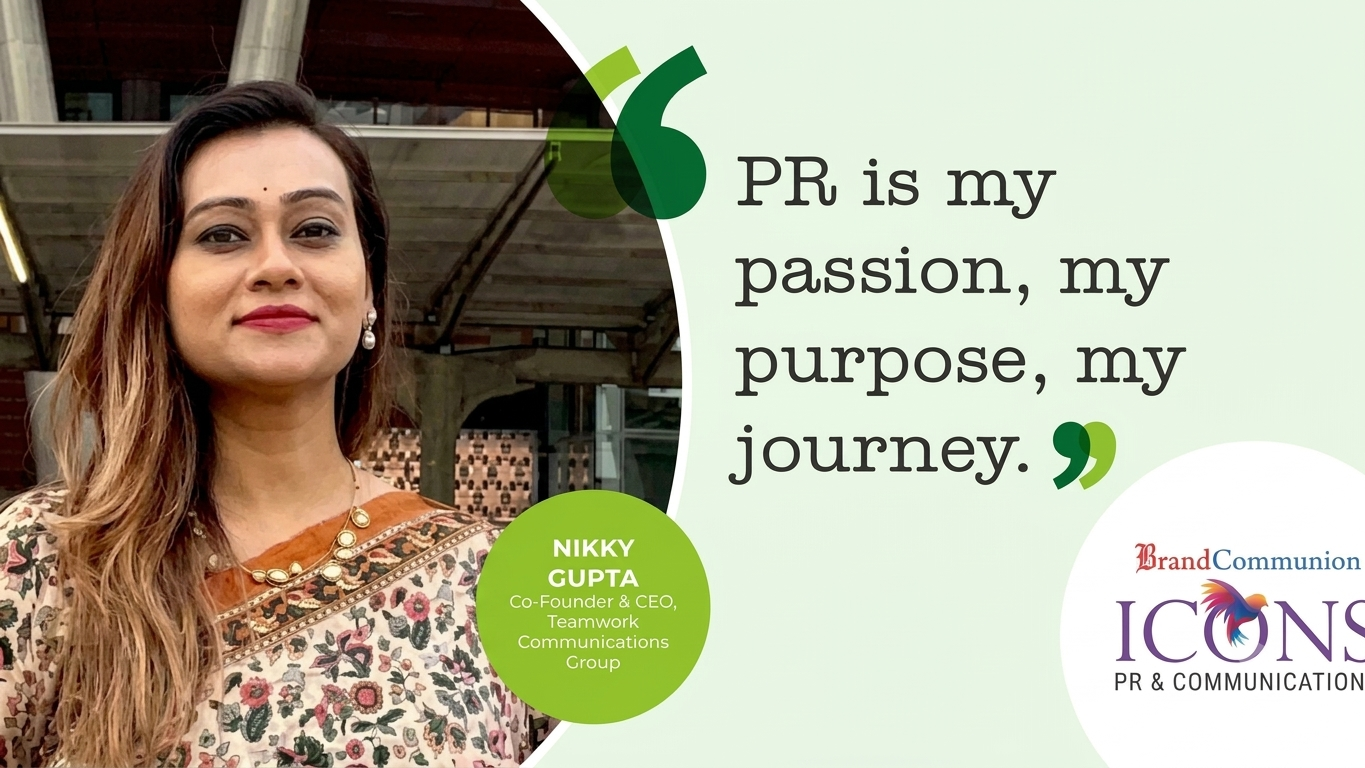


For Nikky Gupta, Co-founder and CEO, Teamwork Communications Group, a career in public relations was not part of a predetermined plan. Growing up in Kanpur in a traditional business family, Gupta initially pursued journalism before a faculty member's simple observation, “You are meant for PR” introduced her to a profession she had barely encountered before.
What began as an unexpected career choice eventually became a long-term entrepreneurial journey. In the latest edition of PR Icon, Gupta reflects on building Teamwork Communications Group from the ground up alongside her husband and moving beyond campaign execution to view communications as a strategic business function. She discusses the importance of earning client trust, particularly as an independent agency without legacy industry connections, and how the evolution of PR has pushed agencies to integrate media relations with digital influence, content, creator ecosystems, founder branding and reputation management.
Gupta also looks back at the early challenges of building an organisation with limited capital, while balancing entrepreneurship, motherhood and family responsibilities. For her, those experiences reinforced the importance of resilience, patience, adaptability and long-term relationships.
Edited Excerpts:
Q: How did your journey in PR begin? Was it a conscious career choice or something you attribute to chance? Did your parents understand and support your decision at the time?
I grew up in Kanpur in a traditional business family where women were generally expected to follow conventional paths. But somewhere, I always knew I wanted to create my own identity and explore something beyond the expected. Watching my father’s entrepreneurial mindset from a young age shaped the way I looked at life. I was naturally drawn towards business, people, and communication.
Honestly, I never imagined Public Relations would become my career because, at that time, hardly anyone in a city like Kanpur even knew what PR really was. Like many students, I started with journalism because storytelling and communication genuinely interested me.
During college, one of my faculty members told me, “You are meant for PR.” Ironically, that was probably the first time I seriously heard about the profession. But that one sentence stayed with me and quietly became the beginning of my journey.
Once I entered the industry, I realised PR was far beyond media coverage or events. It was about understanding people, building trust, shaping perception, and creating meaningful influence with authenticity. That human side of PR connected with me instantly and deeply.
So in many ways, PR was not a carefully planned career choice. I genuinely feel PR found me before I fully understood it myself. But once I stepped into the industry, there was complete clarity that this is where I belong. Today, I don’t just work in PR. I live it. It is my passion, my energy, and something I truly feel is meant for me.
Coming from a traditional business family where nobody had even heard of Public Relations, choosing this path required belief, first in myself and then in my family. And while they may not have fully understood the profession initially, they always believed in me, which became one of my biggest strengths.
At the same time, my biggest support system throughout this journey has been my husband, who is also the Co-Founder of Teamwork Communications Group. Building this organisation has always been a shared dream. The vision started with him, and together we have worked towards turning that vision into a growing communications legacy.
Q: What would you consider your defining moment or breakthrough in the industry?
I don’t think my journey had one dramatic breakthrough moment. For me, it has been a series of defining moments that slowly shaped my identity in the industry.
One of the biggest turning points was when I decided to move beyond simply executing PR campaigns and started thinking like a business builder. That shift changed everything for me. I began looking at communications not just as visibility, but as a strategic growth function that could influence reputation, business outcomes, investor confidence, and consumer trust together.
Another defining moment was building Teamwork Communications Group from the ground up and earning the trust of clients across sectors at a time when independent agencies had to work twice as hard to prove credibility. Coming from a non-metro background, without legacy connections in the industry, every opportunity had to be earned through performance, consistency, and relationships.
I also believe the real breakthrough came when clients stopped looking at us as an “agency” and started seeing us as strategic partners in their growth journey. That transition takes years to build because trust in PR is never created overnight.
At a personal level, I think surviving and growing through industry transitions has been equally defining, from traditional PR to integrated communications, digital influence, founder branding, reputation management, and now AI-led communication ecosystems. The ability to evolve without losing the human understanding of communication has probably been the biggest milestone of my journey.
For me, success was never about one headline moment. It was about quietly building credibility over the years and creating an institution that reflects resilience, relationships, and long-term trust.
Q: Can you tell us about the toughest phase in your career, and what that period taught you?
I would say that by God’s grace, my journey has been largely smooth, fulfilling, and full of learning. Of course, like every entrepreneurial journey, there were challenges in the initial years, especially around limited capital and building the organisation from scratch. But I have always believed that rough seas make the ship stronger.
Those early phases taught us resilience, patience, and the importance of staying grounded during uncertainty. Both my husband and I were building the company together, managing operations, clients, talent, and growth simultaneously. It required hard work and persistence, but every challenge became a learning opportunity rather than a setback.
Personally, too, balancing entrepreneurship with motherhood and family responsibilities shaped me in many ways. Some moments demanded emotional strength, adaptability, and discipline, but those experiences also made me stronger as a person and more empathetic as a leader.
I genuinely believe every difficult phase carries a lesson within it. I have never looked at challenges negatively; I have always seen them as opportunities to grow, evolve, and build deeper strength. And throughout the journey, God has been extremely kind and supportive. The faith of my family, my team, and the relationships we built over the years gave me the confidence to keep moving forward with positivity and conviction.
Q: How have you seen PR evolve from when you started to today’s digital-first world? What are some key changes that stand out to you?
When I started my journey, PR was largely perceived as a traditional media-driven function. The focus was heavily on print coverage, press conferences, relationship-building with journalists, and managing brand visibility through conventional channels. News cycles were slower, communication was more controlled, and reputation-building happened over time.
Today, the industry has transformed into a completely integrated, real-time communication ecosystem. PR is no longer limited to media relations; it now sits at the intersection of brand strategy, digital influence, content, social media, crisis management, founder positioning, and stakeholder trust. The speed of communication has changed dramatically. A brand narrative today can be built or challenged within minutes.
One of the biggest shifts I have seen is the transition from “information-led communication” to “influence-led communication.” Earlier, brands focused on what they wanted to say. Today, communication is far more audience-centric, emotion-driven, and conversational. Consumers expect authenticity, transparency, and purpose from brands.
Another major evolution has been the rise of digital and creator ecosystems. Influencers, podcasts, communities, LinkedIn leadership narratives, and short-form content have become extremely powerful reputation drivers. In many cases, founder branding today carries as much value as corporate branding itself.
Data and analytics have also changed the way PR functions. Earlier, success was measured largely through coverage volume. Today, brands want measurable business impact, audience engagement, sentiment analysis, and strategic outcomes. PR has become far more integrated with business growth than ever before.
At the same time, while tools and platforms have evolved, I believe the essence of PR remains unchanged: trust, credibility, relationships, and authentic storytelling. Technology can amplify communication, but human understanding still remains at the heart of meaningful reputation building.
And now, with AI entering the ecosystem, the industry is moving into another transformational phase. AI will improve efficiency, speed, monitoring, and content intelligence, but I still believe creativity, emotional intelligence, instinct, and relationship-building will continue to remain deeply human strengths within PR.
Q: What is one piece of advice you would give to someone just entering the PR industry? And if given the chance, would you still choose a career in PR today?
One piece of advice I would give to anyone entering the PR industry is to first understand that PR is not just about glamour, events, or media visibility. It is a people’s business built on trust, credibility, and relationships. If you genuinely enjoy understanding people, solving problems, building narratives, and working in high-energy environments, then PR can be an incredibly rewarding profession.
I would also tell young professionals to stay curious and adaptable because this industry evolves constantly. The platforms, tools, and formats will keep changing, but your ability to think strategically, communicate authentically, and build human relationships will always remain your biggest strength.
At the same time, patience is very important. PR is an industry where reputation is built over years, not overnight. Consistency, reliability, and integrity matter far more than short-term visibility. I always believe that your credibility eventually becomes your biggest personal brand.
And most importantly, never stop learning. The industry today is moving rapidly towards integrated communication, digital influence, AI-led tools, creator ecosystems, and data-driven storytelling. The professionals who will grow are the ones who continuously evolve with the changing ecosystem while still keeping the human side of communication alive.
And honestly, if I were given the chance again, I would absolutely still choose PR. Without a second thought.
For me, PR has never been just a profession. It has been a passion, a purpose, and a journey of constant learning. It gave me the opportunity to build relationships, shape narratives, create impact, and build something meaningful from the ground up. I genuinely feel I was meant for this industry.
Q: What is one common misconception about PR that you would like to correct?
Another misconception is that PR delivers instant results. In reality, reputation and credibility are built over time through consistency, trust, and meaningful communication.
People also often underestimate the strategic thinking and emotional intelligence required in PR. Today, PR is not just about publicity. It plays a key role in shaping brand reputation, consumer trust, founder positioning, and overall business growth. For me, the real strength of PR lies in building lasting credibility.
Q: Where do you see the PR industry heading in the next five years?
I believe the PR industry is moving towards a far more integrated, technology-driven, and influence-led future. Over the next five years, PR will no longer function as a standalone communication vertical. It will become deeply connected with business strategy, brand reputation, digital influence, and leadership positioning.
AI and data intelligence will significantly transform the industry by improving content efficiency, media monitoring, sentiment analysis, and predictive communication strategies. But despite technological advancement, the human side of PR — creativity, emotional intelligence, storytelling, and relationship-building will remain irreplaceable.
Another major shift will be the rise of founder-led communication and personal branding. Today, people connect more with authentic voices than with corporate messaging alone, and this trend will continue to grow.
The creator economy, regional content, digital communities, and real-time reputation management will also become even more important. Brands will need to communicate with greater transparency, agility, and authenticity because audiences today are far more aware and opinion-driven than ever before.
I also see PR evolving from a “support function” to a core business growth driver. Companies will increasingly expect PR professionals to contribute not just to visibility, but to trust-building, stakeholder confidence, consumer engagement, and long-term brand value creation.