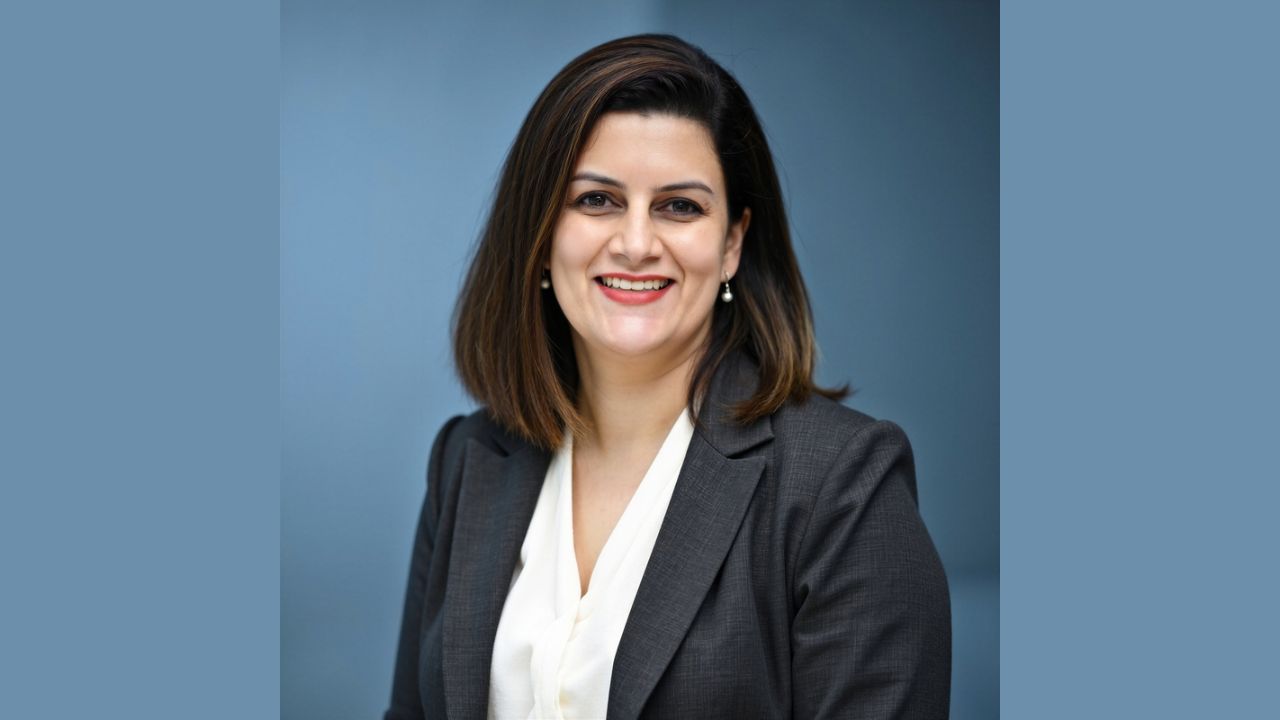


For Nandini Chatterjee, a career in communications was not part of the original plan. Her professional journey began in product management across sectors including steel, infrastructure, chemicals, television and electronics, before gradually moving into PR and corporate affairs.
Her transition took clearer shape at Jindal Group and DuPont, eventually leading her to PwC, where she spent more than two decades building and leading a nearly 50-member marketing and communications function.
In this episode of the Brand Communion ICON series, Nandini Chatterjee, former Chief Marketing and Communications Officer at PwC, reflects on her unconventional entry into PR, lessons from navigating the Satyam crisis, the evolution of the profession and what the next generation of communicators needs to succeed.
Edited Excerpts:
Q: How did your journey in PR begin? Was it a conscious career choice or something you attribute to chance?
My career did not begin in communications. I started in product management across sectors like steel, infrastructure, chemicals, television and electronics, which gave me a broad and grounded understanding of how businesses actually work. At Jindal’s Group (JSL, JSPL, and SAW Pipes), I gradually began moving towards PR and communications, and at DuPont, where I handled corporate affairs, that shift started taking clearer shape.
But it was at PwC where everything came into full bloom. Over 21 years, I built a team of close to 50 professionals, functioning almost like an in-house agency, driving marketing and communications strategies across all the firm's competencies and sectors. We built pan-India relationships with editorial teams across mainlines, business publications and channels, introduced digital marketing, created in-house creative and video capabilities, and placed internal communication at the heart of reputation management.
Unlike many communications professionals today who come from journalism or agency backgrounds, my path was different. What I believe helped me was a deep understanding of how brands are built, from marketing and consumer insights to storytelling and messaging. That foundation has stayed with me.
On the question of my parents, I come from a family of doctors, and like my two brothers, that was the expected path for me too. When I did not clear the medical entrance exam on my first attempt, instead of trying the following year again, I chose B.Com (Hon) and Management, which was just beginning to gain traction among young people at the time. I never looked back. I am not sure my parents ever fully understood what I did for a living, and then they heard of Price Waterhouse in 2009! That, they understood.
Q: What would you consider your defining moment or breakthrough in the industry?
For me, the defining moment came in January 2009, when PwC India found itself at the centre of one of the biggest corporate crises the country had seen. Price Waterhouse, one of the PwC network firms, was the auditor of Satyam Computers, which had committed a massive fraud. As auditors, Price Waterhouse came directly under fire, and I was part of the core team managing the reputation fallout.
This was exactly the situation where the crisis manual flew out of the window. We were navigating in real time, sometimes landing in headlines for the wrong reasons, sometimes managing to steer the story just right. It was deeply stressful and deeply instructive in equal measure. Over time, we stabilised the brand and then began the longer, harder work of rebuilding it.
What that experience taught me was that crisis management in any country cannot be lifted from a global playbook. Local nuances, the pace of the Indian media cycle, the sensitivities of stakeholders in this market, all of it demands a different kind of thinking. I went beyond the global guidelines to devise strategies that worked on the ground here.
The learnings from that period stayed with me and eventually travelled beyond India. I contributed to a live crisis simulation module that was used to train communication leaders across the PwC global network. That, for me, was the moment I knew that what I had navigated had value beyond my own organisation.
Q: Can you tell us about the toughest phase in your career and what that period taught you?
The 2009 Satyam crisis was intense, but in a different way. That was a professional challenge where the path forward, however difficult, was clear. The tougher phases, in my experience, are the ones that are more personal in nature.
One that stands out is a period when I worked under a manager who had no background in marketing, communications or PR, and for reasons I could not fully understand, felt threatened by the relationships and credibility I had built over the years. Despite my efforts to bring him along, to share context, align on strategies and make him comfortable with the work, I could not get through. Over time, that discomfort turned into a pattern of undermining, and I had to consciously remind myself every day to hold my ground and stay focused on the work.
What kept me steady was the trust of my team and the people around me who could see the situation clearly. I knew it was a matter of time before things corrected themselves, and they did.
But what that period truly taught me was something I have carried into every leadership role since. How you treat people who work for you defines you far more than your own achievements do. I became more deliberate about creating space for my team, more protective of their visibility and growth, and more conscious of never making someone feel small so that I could feel larger. That is perhaps the most important leadership lesson I have taken from a difficult chapter.
Q: How have you seen PR evolve from when you started to today’s digital-first world? What are some key changes that stand out to you?
When I started, there was no PR function to speak of. Product Managers handled whatever communication existed, and it was only in the early 1990s that agencies like Perfect Relations began offering PR as a defined service. A handful of forward-thinking companies started recognising the value of media relationships, and the function slowly began to take shape.
Over the decades, PR in India has transformed from a predominantly media relations role into a multi-dimensional strategic function. The focus shifted from getting coverage to driving business outcomes, building reputation and contributing to the larger narrative around a brand's purpose. Storytelling became central, and with it came the expectation that communications professionals would speak not just for their organisations but to societal issues like sustainability and responsibility.
The most significant shift, without question, has been digital. Social media platforms became indispensable, YouTube emerged as a major content discovery engine, and the old boundaries between paid, earned, owned, and shared media dissolved into a single integrated challenge. Regional content, data driven measurement, influencer ecosystems and real-time crisis management all became part of the same job description.
And crisis management itself changed fundamentally. The speed at which a situation can escalate digitally demands responses that are both immediate and precise. Too slow and you lose the narrative. Too reactive, and you make it worse. That balance requires a kind of discipline that can only come from experience.
Now, with AI-driven search pulling content from owned platforms and credible earned media, we are entering yet another inflection point. Sponsored content is largely invisible to these systems. What gets picked up is what is genuinely useful, well-sourced, and editorially credible. In many ways, this brings the profession back to its roots. Credibility was always the currency. AI has simply made it non-negotiable.
Q: What is one piece of advice you would give to someone just entering the PR industry? And if given the chance, would you still choose a career in PR today?
I am going to take the liberty of offering two thoughts rather than one.
The first is this. When you start your career, think of yourself as a sponge. Read voraciously. About your company, your industry, your competition and what is shifting around you. Your judgement as a professional will be shaped by what you learn, what you experience and your ability to read context and make sense of it. Knowledge gives you confidence, and confidence gives you a voice. Even when you are put on work that feels beneath you, especially then, stay open. Every experience will find its use, often when you least expect it.
The second is about what I look for when I hire, because I think it tells young professionals what actually matters.
I look at two things. Aptitude and attitude. In terms of aptitude, I want to see curiosity. Can you look at a concept and understand how different businesses apply it differently? Can you understand why some succeed and others do not using the same tools? Practical thinking matters far more to me than textbook answers.
But if I am honest, attitude weighs more heavily. I want to know if you have failed at something and what you took from it. How you handled an ethical dilemma. How you responded to the change you did not choose. Whether you helped someone weaker or more junior without being asked. Whether you feel a sense of responsibility towards the world around you.
I am not looking for rehearsed answers or someone who tells me they want world peace. I am looking for passion, authenticity and the quiet confidence of someone who means what they say. A positive, constructive attitude will take you further in this profession than almost anything else.
And would I choose PR again? Without hesitation. It sits at the intersection of business, human behaviour and storytelling. There is no better place to be.
Q: What is one common misconception about PR that you would like to correct?
The biggest misconception is that PR is about spin. That it is the art of making something look better than it is. Nothing could be further from the truth, and frankly, nothing damages a brand faster than communication that gets ahead of reality.
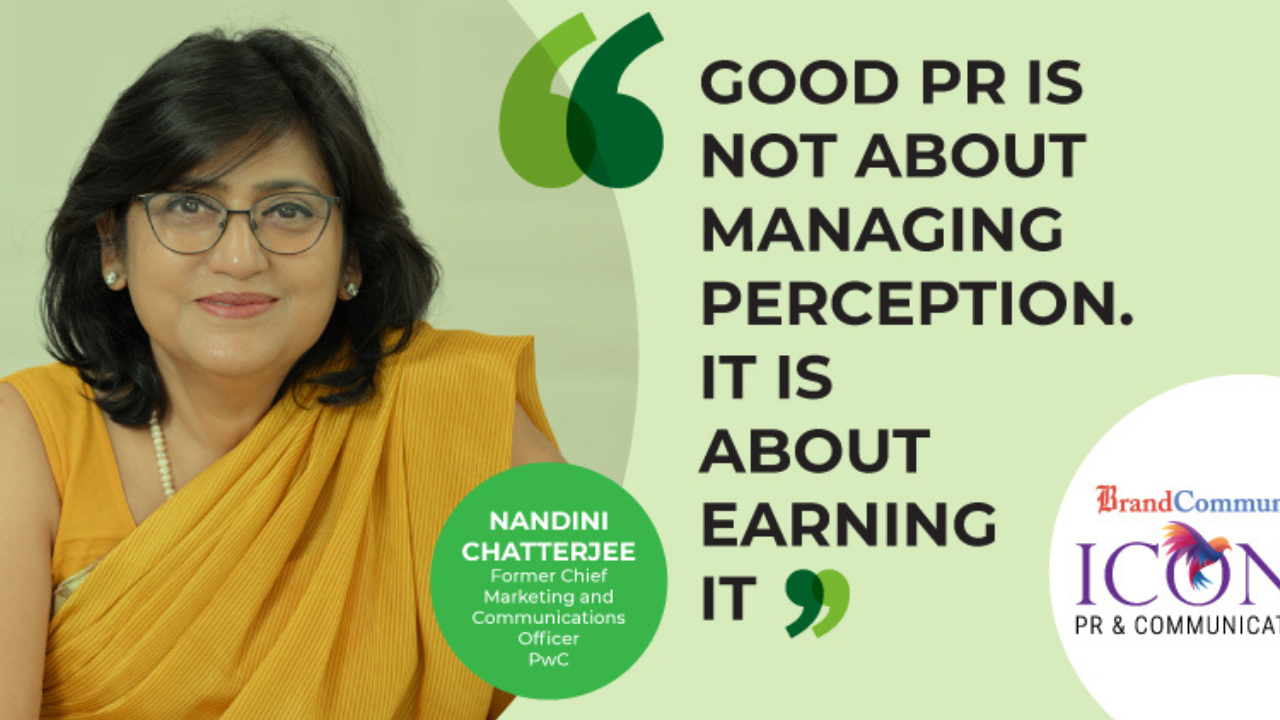
Good PR is not about managing perception. It is about earning it. And you earn it through consistent behaviour, honest communication and the discipline to remain silent when you have nothing credible to say. The most powerful thing a communications professional can do is tell leadership what they do not want to hear, and frame a response that is honest even when it is uncomfortable.
At its best, PR is a force for good. It builds transparency and trust. It amplifies social impact, gives voice to those who are rarely heard, and makes complex issues accessible to the people who need to understand them. It strengthens accountability, fosters collaboration, and can genuinely drive positive change in the world.
Spin is a short-term game. Credibility is a long-term asset. And a profession that is grounded in truth and in the genuine desire to connect organisations with the people they serve has far more power to do good than it is ever given credit for.
Q: Where do you see the PR industry heading in the next five years?
The next five years will be the most transformative the profession has seen, and I say that having watched it evolve for over three decades.
The most immediate shift is already underway. With AI driven search changing how people find information, the premium on credible, useful content has never been higher. Owned platforms and earned media in credible publications are what AI systems draw from. Sponsored content and hollow messaging will simply not show up. This is not a threat to good communications. It is a filter that rewards it.
Beyond search, AI will change the work itself. Research, monitoring, drafting, data analysis, all of it will become faster and more efficient. But the judgment of what to say, when to say it, and how to position an organisation through a crisis or a controversy, that will remain deeply human. The professionals who will thrive are those who use AI as a tool while building relationships, networks, and sharpening the instincts that no tool can replicate.
I also see reputation management becoming a boardroom priority in a way it has not been before. In an era of instant scrutiny, where a single misstep can travel globally in minutes, organisations will increasingly treat communication as a strategic function and not a support one. The CCO must have a seat at the table, because the risks of not having one are simply too high.
And finally, purpose will matter more, not less. Consumers, employees and investors are all paying closer attention to what organisations stand for and whether their actions match their words. PR professionals who can help build that alignment honestly and consistently will be the ones shaping the most enduring reputations of the next decade.
The craft is not diminishing. It is becoming more consequential. And that is a good place for the profession to be.
Q: If your PR journey had a headline, what would it be?
"The Up Was Never Far Away."
Every career has its difficult chapters. Mine was no different. There were moments of self doubt, of working through situations that tested my patience and my resolve. But I always believed that if you keep your head down, stay focused on the work, maintain your integrity and surround yourself with people who are better than you in some way, the tide turns. It always did for me.
Looking back, I think the ups felt sweeter precisely because of the downs. They made me value the work more, appreciate the people more and never take a good phase for granted. That is perhaps the best thing a difficult period can do for you. It sharpens your appetite for what comes next.
Q: What inspired you to start Comms and Conversations, and what is next?
Three years ago I started Comms and Conversations, a vodcast series that came from a simple desire to give back to the industry while continuing to learn myself. I wanted to create a platform for conversations that rarely happen at conferences or seminars, bringing together practitioners and advisors to share honest, balanced perspectives on real challenges in marketing, PR and communications.
Thirty-one episodes and over sixty interviews later, I hope it is making a difference. The subjects have ranged from performance marketing and media relations to storytelling, personal branding and influencer marketing. But the biggest takeaway has not been the topics. It has been the humility and generosity of every guest. Accomplished professionals who chose to share their experience in plain, jargon free language, with the sole purpose of helping the next generation find their footing.
What keeps me going is the response. When a young professional writes in to say that an episode helped them, the personal time, effort and resources invested feel entirely worthwhile.
From April 2026, I have taken that intent a step further with a weekly reel series called My Take on Communications, sharing perspectives from my own journey, specifically for those just starting out. Three episodes in, I am already receiving questions from viewers on topics they would like me to address. That kind of engagement tells me the conversation is only getting started.