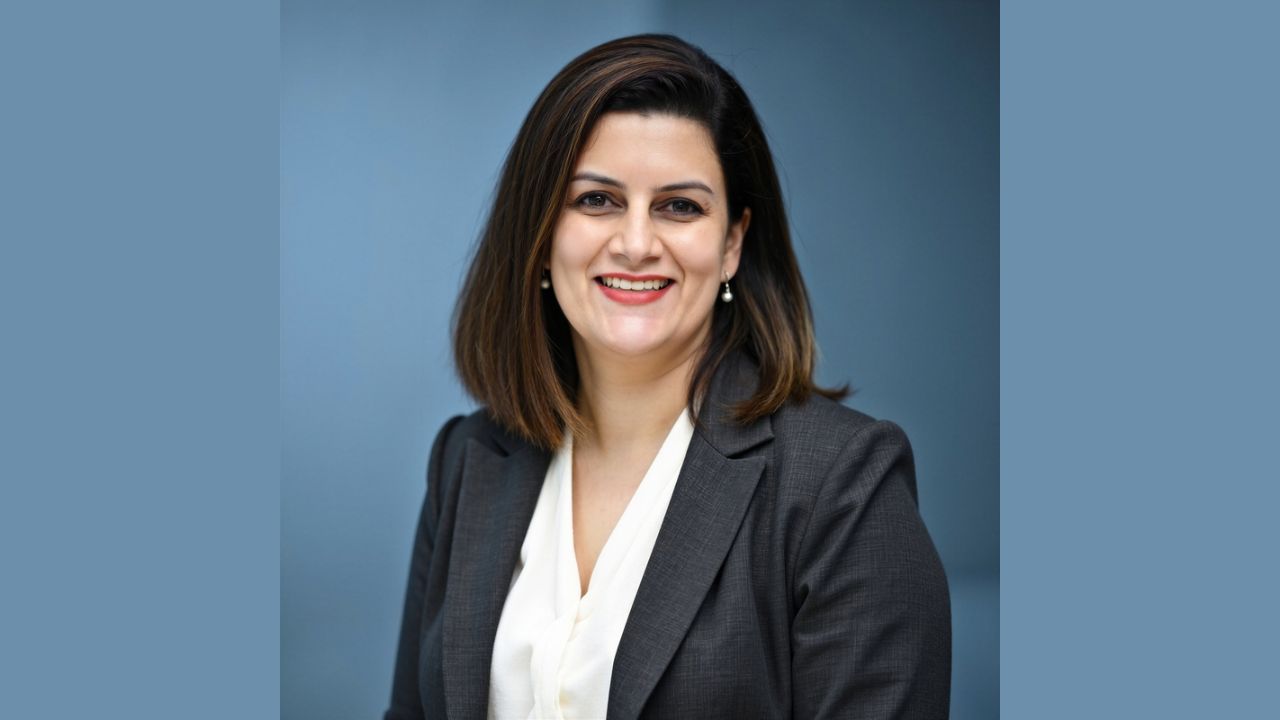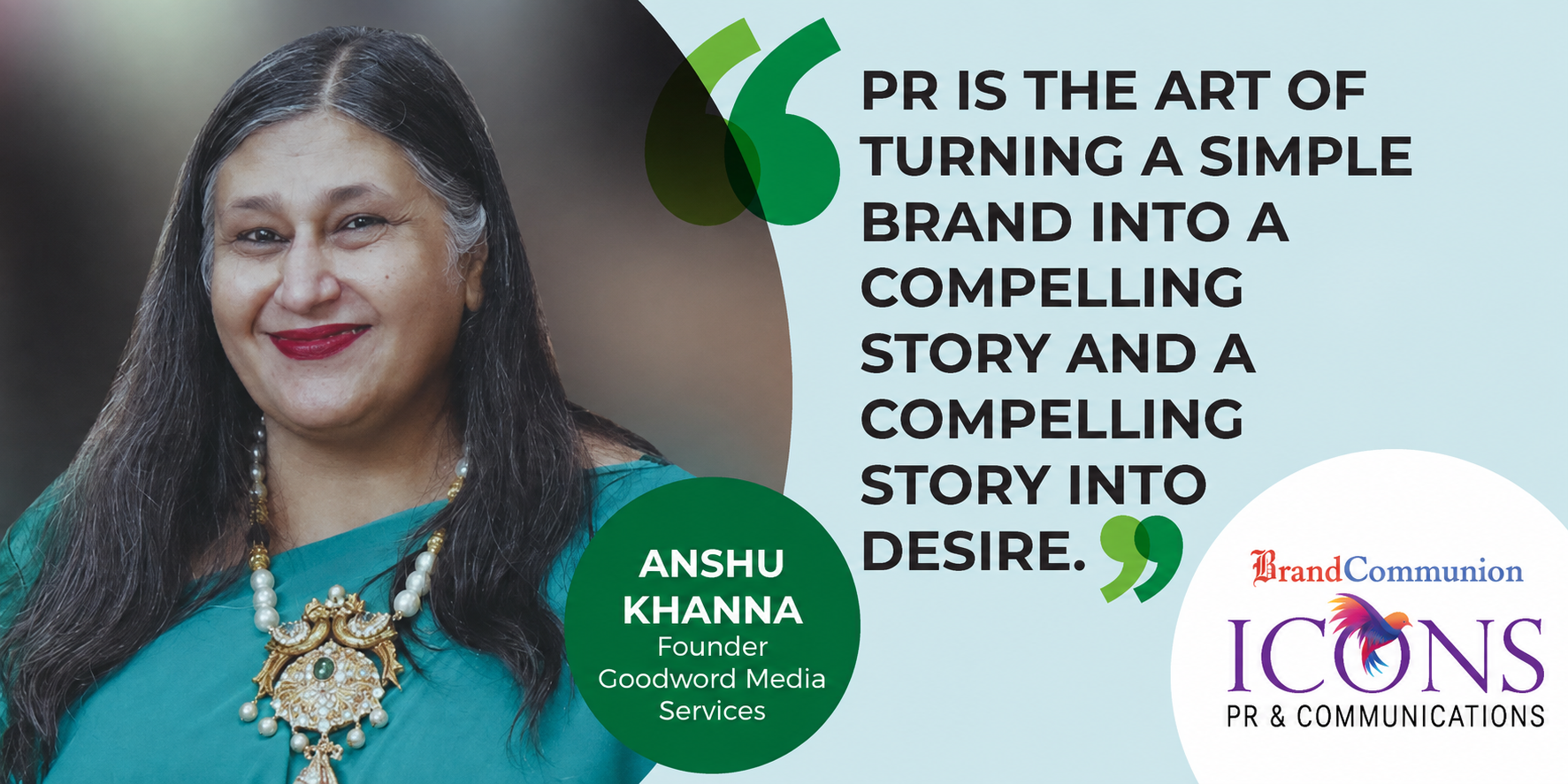


For Anshu Khanna, Founder of Goodword Media Services, a career in public relations was never part of a carefully mapped-out plan; it began almost by fluke and evolved into a decades-long journey at the intersection of culture, fashion, retail, and storytelling. At a time when PR for these sectors was still relatively unexplored in India, Khanna found herself at the centre of a rapidly changing industry, helping introduce international brands such as Marks & Spencer, The Body Shop and Hugo Boss to Indian audiences, while also representing some of the country’s leading couturiers, including Rohit Bal, Suneet Varma and Ritu Beri.
Her journey has since extended far beyond conventional PR, spanning fashion, retail, performing arts, and cultural storytelling. Today, through Royal Fables, she is showcasing the living heritage of the country’s erstwhile princely states. She continues to build narratives around art, crafts, textiles, jewellery, and cuisine.
In this Brand Communion ICON series, Khanna reflects on the defining moments of her career, changing dynamics of PR, impact of paid media and influencers, and why credibility and substance remain central to effective communication. She also shares her perspective on the future of the industry and the art of turning even a simple brand into “a compelling object of desire.”
Edited Excerpts:
Q: How did your journey in PR begin? Was it a conscious career choice or something you attribute to chance? Did your parents understand and support your decision at the time?
I got into PR by fluke. At a time when there was no one else handling PR for culture, fashion, and retail. My agency rode the wave of international retail and we were the ones to introduce global brands like Marks & Spencer, The Body Shop, Hugo Boss, etc. We also handled most Indian couturiers, launching household names like Rohit Bal, Suneet Varma, and Ritu Beri to the world.
My journey into PR was a blend of instinct and serendipity. I was always drawn to storytelling, influence, and the power of perception. A journalist who was working for magazines that were market leaders then, for me, PR felt like a natural extension of that curiosity.
At the time, it wasn’t the most conventional or understood career path, especially in India, so there was a degree of ambiguity around it. But once the results began to show, both in terms of impact and credibility, my family became deeply supportive. Over time, what began as a curious choice evolved into a clear calling.
Q: What would you consider your defining moment or breakthrough in the industry?
There wasn’t a single overnight breakthrough; it was more a series of compounding moments. But if I had to isolate one, it would be when we began advising almost the entire fashion fraternity of India, besides working with all the malls, all the dancers, and all the performing artists. The room for creative professionals was bursting, and we held the key to that room!
Q: Can you tell us about the toughest phase in your career, and what that period taught you?
The toughest phase was when paid PR turned everything into a monetised nightmare. Added to that was the emergence of senseless, classless influencers who replaced depth with shallow actions and words with empty pouts!
Q: How have you seen PR evolve from when you started to today’s digital-first world? What are some key changes that stand out to you?
PR has transformed from being largely media-driven to being ecosystem-driven. Earlier, the focus was on gatekeepers—editors, journalists, legacy media. Today, influence is decentralised. Digital platforms, creators, and real-time engagement have reshaped the landscape. Speed has increased, attention spans have decreased, and authenticity has become non-negotiable. The biggest shift is that PR is no longer just about visibility—it’s about sustained narrative ownership across platforms.
Q: What is one piece of advice you would give to someone just entering the PR industry? And if given the chance, would you still choose a career in PR today?
Stay curious and stay credible. This industry rewards those who listen deeply, think strategically, and communicate with clarity. Don’t chase noise—build substance.
And yes, I would absolutely choose PR again. It is one of the few professions where you are constantly at the intersection of culture, business, and human behaviour. It keeps you relevant.
Q: What is one common misconception about PR that you would like to correct?
That PR is merely about “getting coverage.” In reality, PR is about shaping perception, building trust, and managing reputation over time. Media visibility is just one outcome, not the objective.
Q: Where do you see the PR industry heading in the next five years?
The future of PR lies in integration, where communications, data, digital strategy, and reputation management converge seamlessly. AI and analytics will play a larger role, but human insight will remain irreplaceable. There will also be a stronger emphasis on purpose-led storytelling, as audiences increasingly demand accountability and authenticity from brands and leaders.
Q: If your PR journey had a headline, what would it be?
“I am a storyteller who spins sharp fantasies, turning even a simple brand into a compelling object of desire that becomes a must-add to a patron’s life.”