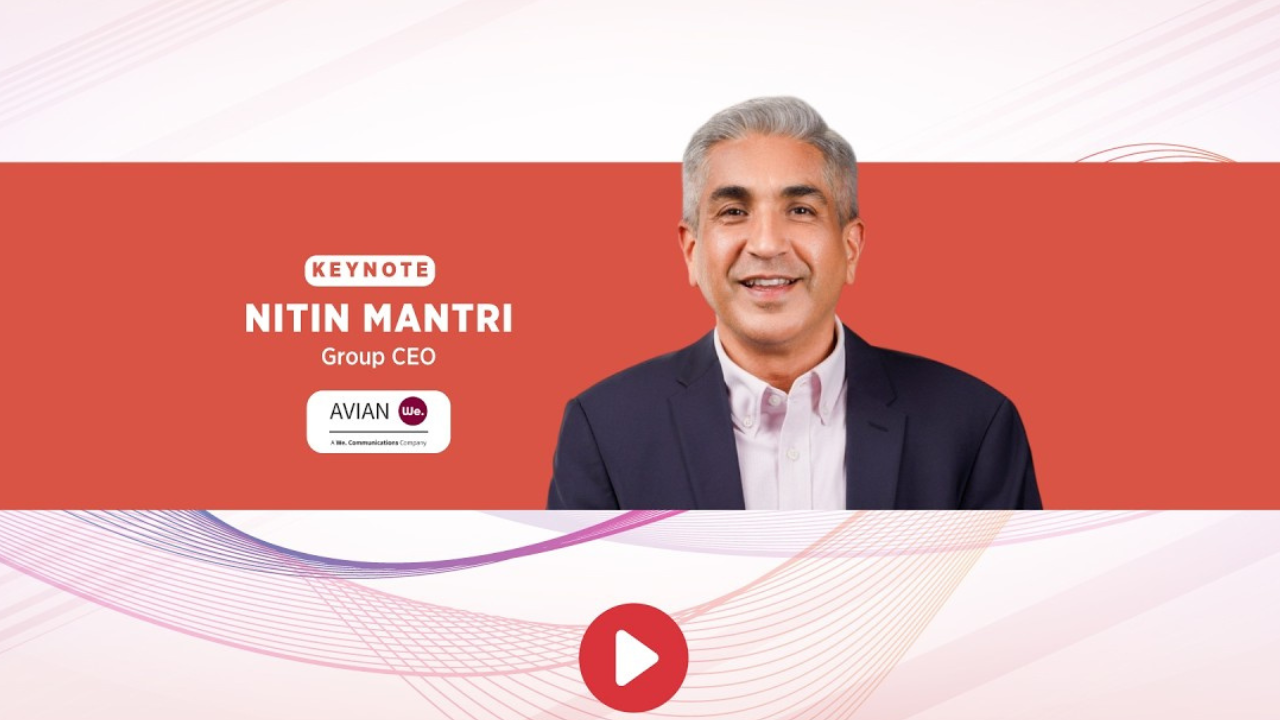


The communications industry is undergoing a fundamental shift as artificial intelligence (AI), creators and communities reshape how consumers discover information and make decisions, according to Nitin Mantri, Group CEO, Avian WE.
Speaking at the annual flagship event of BrandCommunion Convergence Summit, Mantri said brands are no longer operating in an era where influence is concentrated among a handful of media outlets and social platforms. Instead, they are navigating what he described as a "constellation of influence", where AI systems, journalists, creators, communities and digital platforms collectively shape trust and consumer choices.
He noted that the attention economy, creator economy and an emerging machine-led discovery economy are converging, fundamentally altering the communications landscape.
"Influence is no longer concentrated in a few familiar places. It has become fragmented. Staying within the familiar orbit is no longer the safe choice; it's the risk," Mantri said.
From search rankings to AI answers
One of the biggest disruptions, according to Mantri, is the growing role of AI in information discovery.
He pointed out that nearly 70% of searches now end without users clicking on a website, as AI-generated summaries increasingly answer queries directly. Large language models such as ChatGPT and Perplexity have also seen search traffic multiply rapidly over the past year, making them powerful gatekeepers of information.
"The challenge for brands is no longer how do we rank highly in search. The question is: how do we become part of the answer?" he said.
Mantri explained that AI systems prioritise credibility and clarity, drawing information from trusted sources such as Wikipedia, Reddit, media outlets and original brand content. This, he argued, elevated the importance of earned media, company newsrooms, research reports and high-quality editorial content.
"Earned media was never as important as it is today," he said.
Authenticity matters more than ever
While AI is changing how information is surfaced, Mantri stressed that audiences are simultaneously seeking greater authenticity from brands and leaders.
Citing research, he said 44% of audiences respond positively when leaders appear unscripted, while more than half of social media users are concerned about brands publishing AI-generated content without disclosure.
Transparency, he added, will become increasingly important as AI-generated communication proliferates.
"Reach does not automatically create resonance. Authenticity does," he said.
Rise of the 'journopreneur'
Mantri also highlighted the emergence of independent journalists who have built audiences across newsletters, podcasts, YouTube and social media, referring to them as "journopreneurs".
These individuals, he said, are no longer merely contributors to traditional media but have become media brands in their own right, creating direct relationships with audiences and influencing public conversations.
He cited examples from across Asia-Pacific and shared how Microsoft Build invited creators and independent media voices alongside traditional journalists to provide tailored experiences, demonstrating how brands must rethink influence mapping.
Creators move beyond entertainment
Creators, Mantri argued, have evolved into strategic business partners rather than just influencers.
He referenced research showing that three out of four consumers are more likely to purchase products recommended by creators, while brands such as Unilever are significantly increasing investments in creator-led marketing.
"You cannot bolt creators on at the end. They need to be woven into the strategy, the story and sometimes even the stage," he said.
One story, many formats
Another key challenge for communicators is adapting content to different platforms instead of repurposing identical assets everywhere.
Mantri said a LinkedIn article cannot simply be shortened into an Instagram Reel or YouTube Short. While the core narrative may remain consistent, its presentation, including the hook, format, pacing and visual language, must be tailored to each platform.
He described this evolution as "content choreography", where brands must optimise storytelling for both people and platforms.
Three principles for brands
To help brands navigate this changing ecosystem, Mantri outlined three guiding principles.
The first is to "double-code" content for both human audiences and AI systems by combining compelling storytelling with structured formats, clear headings, FAQs and metadata that improve machine readability.
He cited Zerodha's Varsity platform as an example of educational content that successfully serves both users and AI discovery.
The second is to experiment with new media personalities and publications, focusing on where target audiences already spend time rather than relying solely on traditional media or conventional influencer marketing.
The third is to engage at scale, but with precision.
"The winners of this new constellation of influence will not be the noisiest. They will be the sharpest, the most focused and the most influential," he said.
Concluding his address, Mantri said the convergence of the attention economy, creator economy and AI-led discovery is creating an entirely new economy of influence, requiring brands to rethink how they build visibility, credibility and trust in the years ahead.
Watch the full video here: