

Quick-commerce platforms have built their proposition around speed, convenience and reliability. But a recent crackdown by Maharashtra’s Food and Drug Administration (FDA) is putting another part of that promise — consumer trust — under the scanner.
A statewide inspection drive targeting food businesses, including facilities linked to online delivery platforms, has uncovered a string of food safety and hygiene violations across quick-commerce operations. The action has resulted in 14 food business licences being suspended, alongside notices, seizures and directions to rectify violations.
Of the 14 suspended licences, five were linked to Blinkit, five to Zepto and two to Instamart, while the remaining two were associated with other establishments.
The inspections covered 86 establishments linked to online food delivery platforms and examined parameters including storage conditions, temperature control, pest control, hygiene of food handlers, FIFO and FEFO practices, food safety documentation and FSSAI licence compliance.
The findings raise a larger question for the industry: when consumers are promised groceries and food products at their doorstep within minutes, can quick-commerce platforms afford to remain silent when the very basics of food safety are being questioned?
Expired products and pest infestation raise red flags
At a Zepto facility in Pune’s Lohegaon area, FDA officials found food products stored beyond their declared “Use By” dates. The facility was also found deficient in FIFO and FEFO practices, pest control, storage hygiene and personal hygiene standards.
The FDA reportedly found the company’s response during the hearing unsatisfactory.
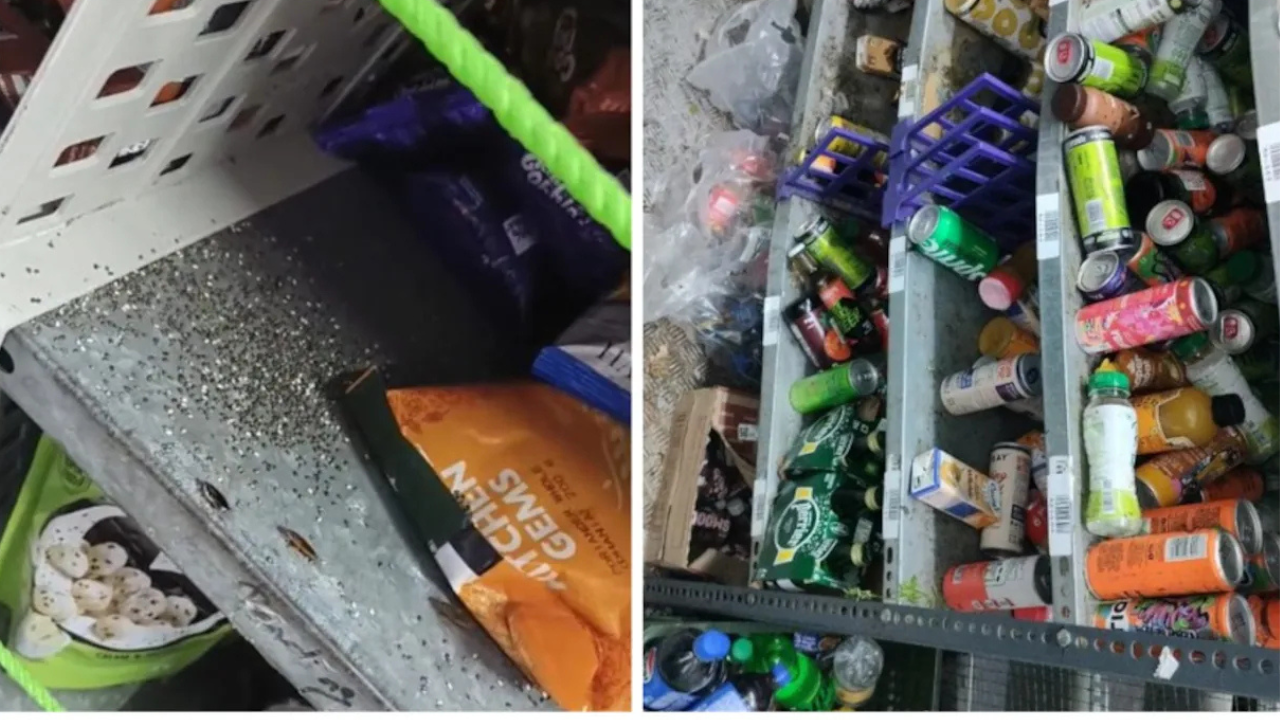
At Swinsta ENT Pvt Ltd in Pune’s Warje area, inspectors reported cockroach infestation, inadequate cold-chain maintenance for frozen products and temperature-control failures, along with serious hygiene and pest-control deficiencies.
For consumers who increasingly depend on quick-commerce platforms for everyday food and grocery purchases, such findings could have implications well beyond individual stores.
Blinkit facilities face multiple violations
Several Blinkit facilities were also flagged during the inspections.
At a Blinkit facility in Malad West, the FDA found a chiller-room temperature of 6 degrees Celsius, along with deficiencies in medical examination records for around 40 food handlers. Several workers were reportedly not wearing prescribed protective gear such as headgear, aprons and gloves.
Inspectors also pointed to disorganised storage, damaged and rusted racks, inadequate segregation of vegetarian, non-vegetarian, cooked and dairy products, and gaps in training and food safety supervision.
At another Blinkit facility in Ghatkopar, officials found inadequate drainage and waste-disposal arrangements, poor temperature control for frozen products and unprotected lighting fixtures in an unpacked-food storage area.
The facility scored 34 out of 74 marks, or 46%, and was classified as non-compliant.
Zepto and Instamart units also under scrutiny
Zepto’s Mulund facility was found to have deficiencies in waste disposal, temperature control, cleanliness and storage segregation. The FSSAI licence was also reportedly not prominently displayed.
The facility scored 81 out of 180 marks, or 45%, and was declared non-compliant.
A reinspection of Zepto’s Gola Unit in Goregaon continued to flag issues around temperature control, lighting, food storage, personal hygiene facilities and cleanliness. Despite scoring 98 out of 142 marks, the unit was still classified as non-compliant.
At an Instamart facility in Andheri, inspectors found food packets stored directly on the floor, along with congestion, inadequate storage space, temperature-control deficiencies and shortcomings in lighting, cleanliness and personal hygiene.
The facility scored 76 out of 140 marks, or 55%, and was declared non-compliant.
Zepto’s Lokhandwala facility was also flagged for inadequate temperature control for perishable food, the absence of an ante-room for frozen products, poor warehouse layout and improper segregation of food, non-food items and hazardous substances. It scored 65 out of 140 marks, or 47%.
The issue goes beyond dark stores
The FDA’s action also extended to delivery operations.
At a Blinkit store in Karad, Satara district, officials examined 125 two-wheeler delivery riders and found that they lacked identity cards and medical fitness records.
The FDA also found that the principal food business’s FSSAI licence was not displayed on delivery carts, bags or boxes. The company was directed to stop business activity involving two-wheeler deliveries until the deficiencies were addressed.
A credibility question for quick commerce
The latest action comes at a time when quick commerce is rapidly becoming a part of consumers’ everyday lives. Platforms compete aggressively on delivery times, assortment and convenience, but speed means little if the quality and safety of what reaches the consumer cannot be guaranteed.
The Maharashtra FDA findings put the spotlight on a fundamental issue for Blinkit, Zepto and Instamart: consumer trust cannot be delivered in 10 minutes if food safety is treated as an afterthought.
The platforms have built powerful brands around convenience. They now face an equally important challenge — demonstrating that the products stored, handled and delivered through their networks meet the standards consumers expect.
And while regulatory action has been swift, the conspicuous question is whether the quick-commerce companies will be equally forthcoming in addressing the concerns publicly.