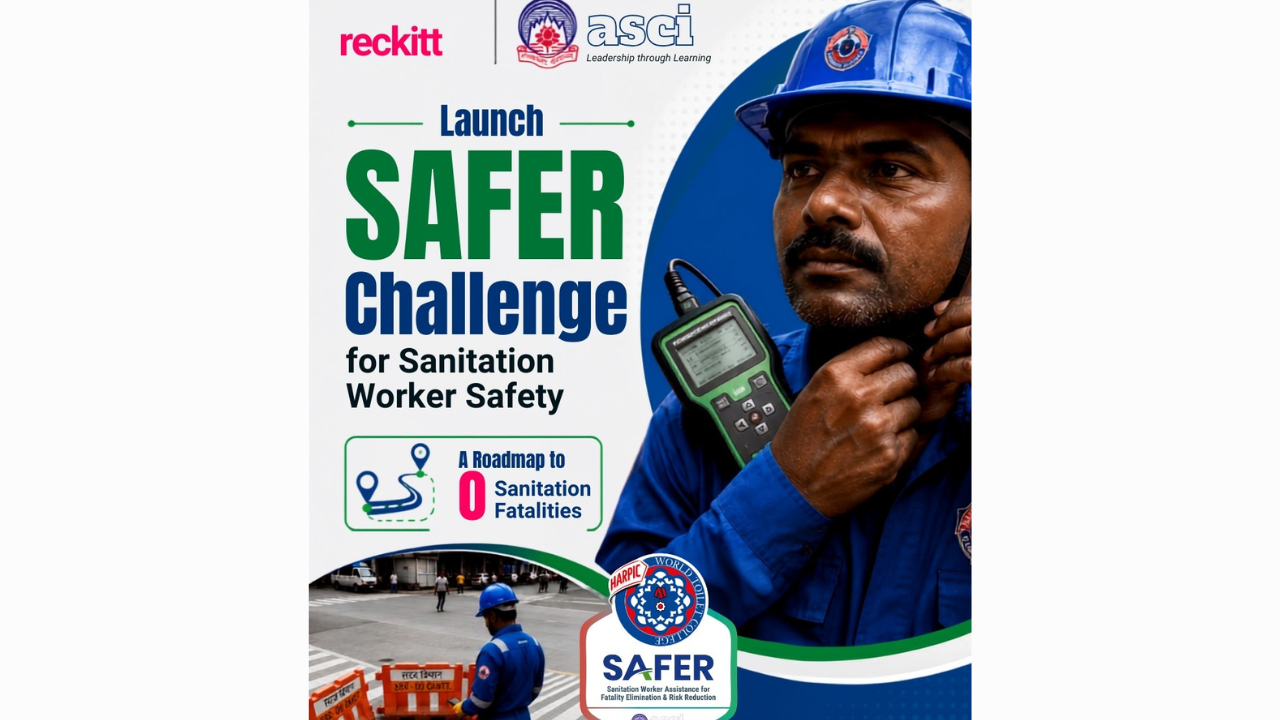


Reckitt, in partnership with the Administrative Staff College of India (ASCI), has launched the SAFER Challenge (Sanitation Worker Assistance for Fatality Elimination & Risk Reduction), a national innovation initiative aimed at improving the safety of sanitation workers involved in sewer and septic tank cleaning operations.
Launched under Reckitt’s Harpic World Toilet College and its broader ‘A Roadmap to Zero Sanitation Fatalities’ commitment, the challenge calls on startups, engineers, researchers, academic institutions, designers and technology innovators to develop affordable, wearable devices capable of detecting hazardous gases in real time.
The initiative seeks to address one of the key risks faced by sanitation workers—exposure to toxic gases and oxygen-deficient environments during cleaning operations. Through SAFER, Reckitt and ASCI aim to encourage practical, scalable and field-ready technologies that can enable timely intervention and reduce occupational risks.
Applications are open to innovators across India. Solutions are expected to be affordable, easy to operate in field conditions and capable of supporting safer sanitation practices. The initiative also aligns with the Government of India’s Viksit Bharat 2047 vision and complements programmes including Swachh Bharat Mission 2.0, NAMASTE and the Safai Mitra Suraksha Challenge.
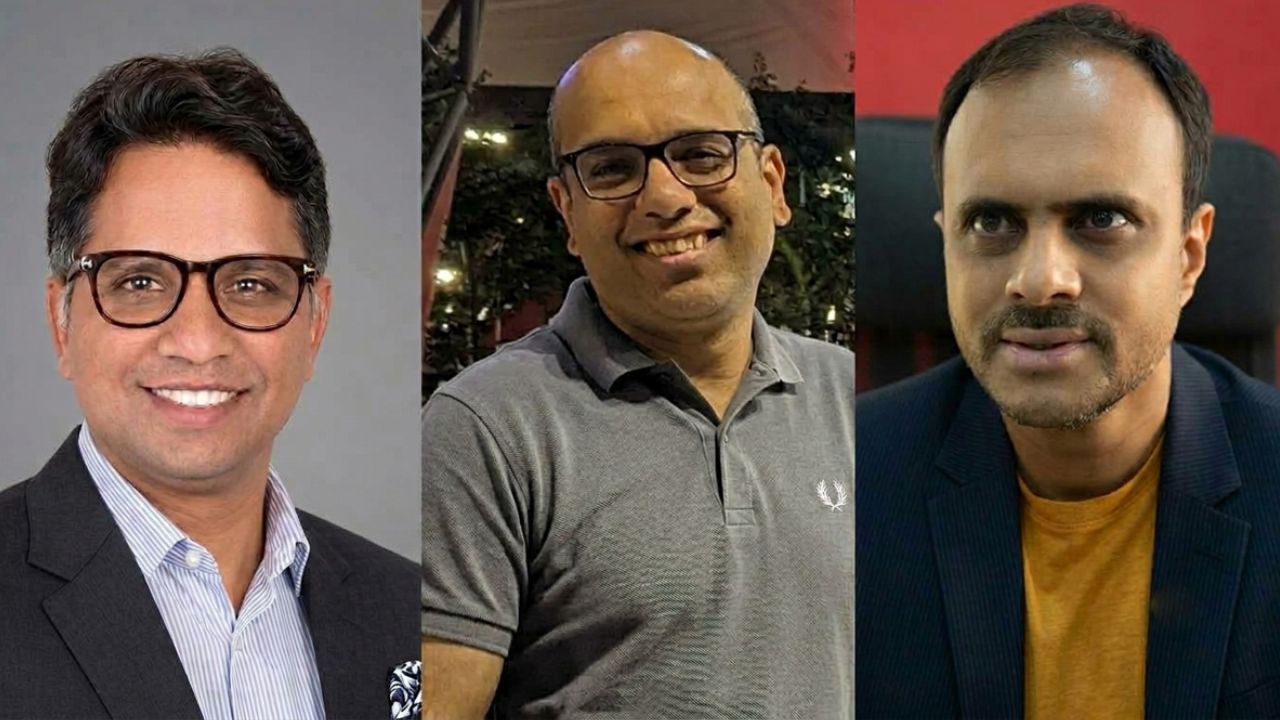
Ravi Bhatnagar, Communications and Corporate Affairs Director, South Asia, MENARP and Africa, Reckitt, said India’s sanitation journey must now focus not only on expanding access but also on improving the safety and dignity of sanitation workers.
“Through the Harpic World Toilet College, we have been strengthening the sanitation ecosystem by building skills and championing dignity and safety for sanitation workers. With SAFER, launched in partnership with ASCI, we are extending this commitment by enabling scalable innovations to address critical safety challenges,” he said.
Dr. B. Janardhan Reddy, IAS (Retd.), Director, CEUG&ID, ASCI, said the challenge aims to address the long-standing safety risks faced by sanitation workers.
“Every statistic in our database represents a life lost that could have been saved. This challenge is not about technology alone, but about restoring dignity and ensuring that no worker has to risk their life to keep our cities clean,” he said.
The challenge will be overseen by a Steering Committee comprising experts from public health, sanitation, governance, urban development, water and hygiene. The committee will be chaired by Prof. Ravi Bhatnagar of Reckitt and include Dr. Ramakant, Deputy Advisor, CPHEEO, Ministry of Housing and Urban Affairs; Padma Shri Prof. (Dr.) Indira Chakravarty, public health and environment expert; and Dr. B. Janardhan Reddy, IAS (Retd.), Centre Director, CEUG&ID, ASCI.
The entries will be evaluated by a jury comprising Sahil Talwar, Director – Impact Initiatives & Partnerships, Jagran Pehel; Asad Umar, Sector Lead and Director, WASH, Aga Khan Foundation; Dr. M. Snehalatha, Associate Professor, CEUG&ID, ASCI; and Dr. Vivek Singh Chauhan, Senior Manager, Partnerships, Reckitt.
SAFER will be implemented across three stages—Pitch, Pilot and Scale. Following an initial evaluation, shortlisted innovations will be tested with sanitation workers and Urban Local Bodies. Successful solutions could subsequently receive support for wider adoption through government and industry platforms.
Selected participants will receive mentorship, field-validation opportunities, access to Urban Local Bodies, interactions with government officials and policy experts, national visibility, and support for pilot deployment and scale-up.
The challenge offers cash grants of ₹5 lakh for the winner, ₹2 lakh for the first runner-up and ₹1 lakh for the second runner-up. Applications will remain open until 1 September 2026, with the winners scheduled to be announced on 2 October 2026.